Vous cherchez un moyen simple d'ajouter des notifications push pour applications web qui peuvent vous aider à développer votre entreprise ?
La configuration des notifications push pour les applications web peut être un peu délicate. Il y a toujours un conflit lors de l'envoi de notifications push web. Généralement, le plus gros problème concerne les taux de livraison. Vous pouvez ajouter des notifications push web à votre application web de nombreuses manières. Mais comment envoyer des notifications push web qui sont réellement livrées depuis votre application web ?
Ne vous inquiétez pas ! Dans cet article, nous allons vous montrer étape par étape comment envoyer des notifications push pour applications web avec des taux de livraison fiables en moins de 10 minutes.
Plongeons dans le vif du sujet.
Comment installer des notifications push pour applications web
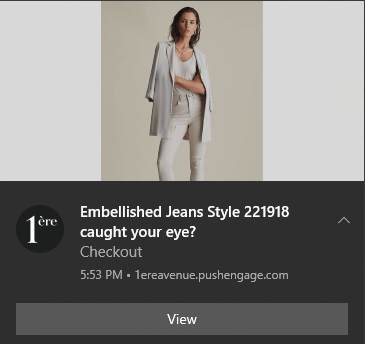
Ajouter des notifications push à une application web est assez simple. Suivez simplement les étapes de cet article. Si vous suivez chaque étape, à la fin de cet article, vous devriez être en mesure d'envoyer des notifications push comme celle-ci :
Le principal défi est que tous les logiciels de notification push web utilisent un fichier Javascript appelé service_worker.js. Le service worker vous aide à collecter les abonnés aux notifications push via des modales pop-up. Mais toutes les applications web ont déjà un fichier service worker qui sert à un autre objectif. Et à la fois, votre application web ne peut utiliser qu'un seul service worker.
En termes simples, les services push web confondent votre application web. Ainsi, parfois, il collectera les abonnés aux notifications push et parfois, il ne le fera pas. Parfois, vous pouvez envoyer des notifications et parfois vous ne le pouvez pas. Vous pourriez même finir par envoyer des messages push à toute votre liste d'abonnés et qu'ils ne soient livrés qu'à quelques abonnés.
Bien sûr, les constructeurs d'applications web comme Mendix sont livrés avec leur propre système de notification push. Mais que faire si vous voulez migrer vers un autre service de notification push ? Que faire si vous voulez plus de flexibilité et de contrôle sur vos campagnes de notification push ?
Nous vous recommandons d'utiliser PushEngage pour envoyer des notifications push pour applications web. PushEngage est le logiciel de notification push numéro 1 au monde. Vous savez donc que vos campagnes sont entre de bonnes mains.
Commençons.
Étape n°1 : Configurer votre compte PushEngage
Rendez-vous sur la page d'accueil de PushEngage et cliquez sur le bouton Commencer :
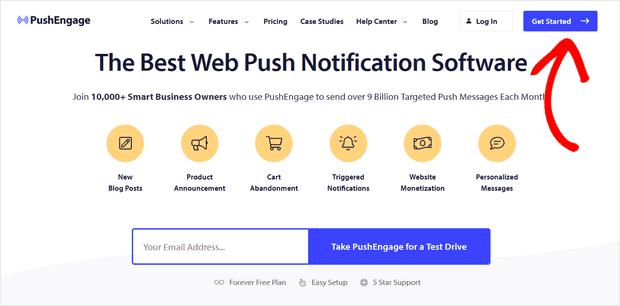
Vous pouvez essayer PushEngage gratuitement. Si vous gérez un petit blog qui a besoin de trafic et d'engagement répétés, cela suffira probablement. Mais si vous êtes sérieux au sujet des ventes, vous devriez obtenir le package Enterprise et débloquer les campagnes automatisées.
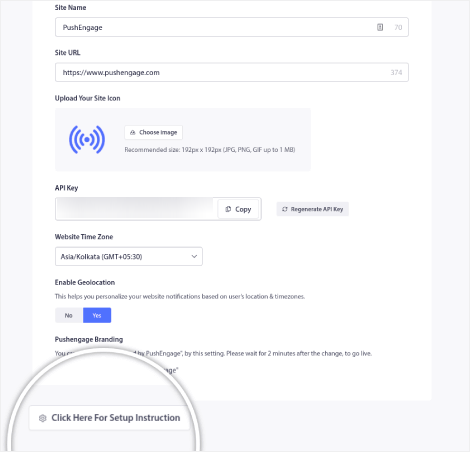
Une fois que vous avez créé votre compte PushEngage, rendez-vous sur votre tableau de bord PushEngage et allez dans Paramètres du site » Détails du site :
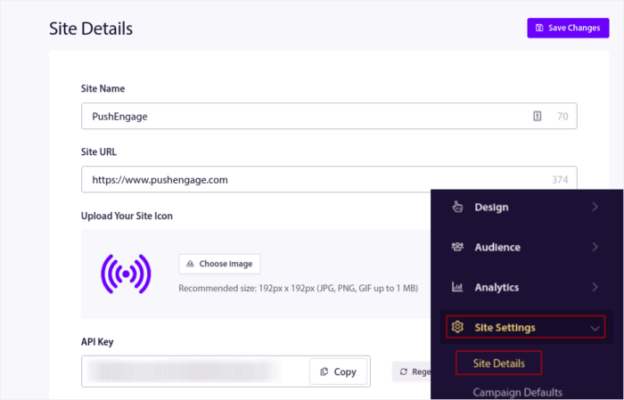
Vous pouvez y définir votre logo, le nom de votre site et l'URL de votre site. Il est très important de régler ces éléments dès maintenant afin de pouvoir tester toute votre configuration plus tard.
Étape n°2 : Obtenir le code d'installation de PushEngage
Pour installer les notifications push, vous devrez obtenir un code d'installation. Dans votre écran Paramètres du site, faites défiler vers le bas et cliquez sur le bouton Cliquez ici pour les instructions de configuration :
Ensuite, cliquez sur l'onglet N'importe quel site :
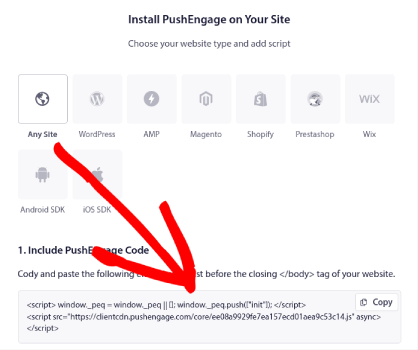
Vous pouvez utiliser le code Javascript pour commencer à envoyer des notifications push.
Étape n°3 : Ajouter le code du Service Worker pour les notifications push d'applications web
La partie la plus délicate du processus est enfin là. Dans le tableau de bord PushEngage, sous Instructions d'installation, vous verrez également une option pour télécharger le fichier du service worker.
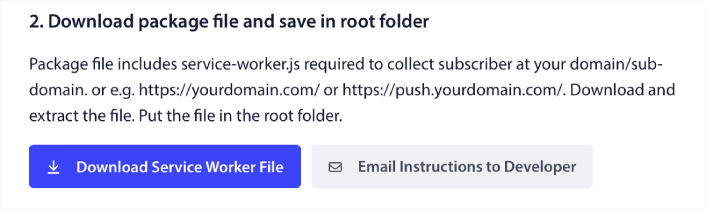
IMPORTANT : Par défaut, une application web ne nécessite pas de fichier service worker. Tout ce dont vous avez besoin pour transformer n'importe quel site en application web est un fichier manifeste. Donc, si votre application web n'a pas de fichier service worker, vous pouvez simplement ajouter le service worker PushEngage au répertoire racine de votre site web ou de votre application web.
Mais si votre application web a déjà un service worker en place, alors NE téléchargez PAS directement le fichier service worker PushEngage tel quel. Ouvrez le service worker PushEngage dans un éditeur de texte comme le Bloc-notes et copiez le code du fichier service worker PushEngage. Ensuite, trouvez le fichier service worker de votre application web et ajoutez simplement le code du service worker PushEngage au fichier.
Si vous négligez cette étape, vous ne pourrez pas collecter d'abonnés aux notifications push.
Étape n°4 : Configurer l'opt-in PushEngage
Maintenant, retournez à votre tableau de bord PushEngage. Allez dans Design » Modèles de popup et sélectionnez l'option de votre choix :
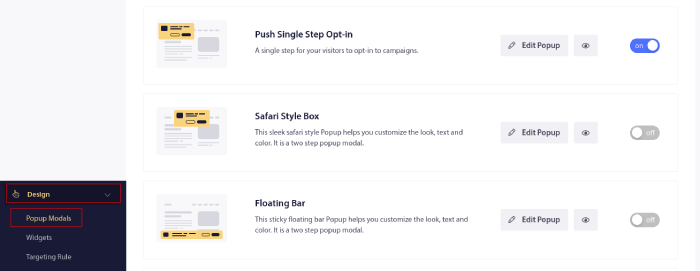
L'idée ici est de donner à vos visiteurs une bonne raison de s'abonner. Si vous avez besoin d'aide à ce sujet, consultez notre article sur comment créer un opt-in de notification push personnalisé.
Et si vous souhaitez des modèles pour commencer, vous devriez consulter cet article sur les opt-ins de notification push à haute conversion.
Étape n°5 : Créer votre première campagne
Maintenant que votre application web peut envoyer des notifications push, vous devriez créer une campagne réelle.
Une campagne de panier abandonné aide à générer des revenus supplémentaires en convertissant les paniers abandonnés. C'est un simple rappel qui vend beaucoup de produits en mode automatique. C'est donc une excellente campagne pour soutenir toute page de destination qui génère des ventes directes.
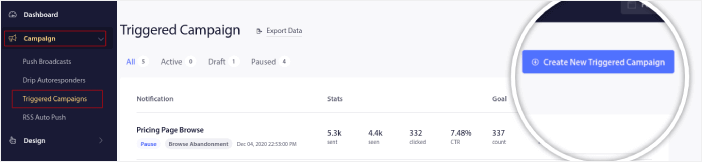
Rendez-vous simplement sur votre tableau de bord PushEngage et allez dans Campagnes » Campagnes déclenchées » Créer une nouvelle campagne déclenchée :
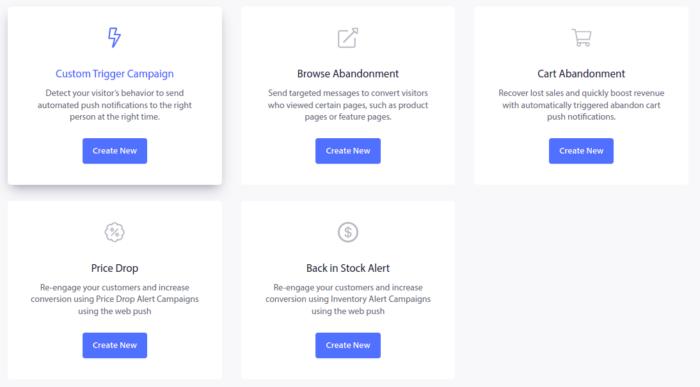
Et ensuite, sélectionnez le modèle de campagne Abandon de panier :
Si vous débutez dans la création de campagnes marketing automatisées, vous pouvez simplement suivre notre article sur comment configurer une campagne de notification push de panier abandonné. Suivez chaque étape et vous pourrez configurer des notifications push comme celle-ci :
Et juste au cas où vous vous demanderiez, vous n'avez pas besoin d'être une marque de renommée mondiale pour que vos campagnes de notifications push soient efficaces. En fait, PushEngage a été créé pour aider les petites entreprises à se développer grâce aux notifications push.
Mais avant de commencer à commercialiser votre site, vous devriez corriger tout problème avec votre processus d'abonnement aux notifications push. Consultez cet article sur le test de vos notifications push. Si tout fonctionne parfaitement, vous avez terminé !
Que faire après avoir ajouté les notifications push pour applications web ?
C'est tout pour cette fois, les amis !
Vous pouvez désormais envoyer des notifications push d'application web. D'ici maintenant, vous avez également créé une puissante campagne de notifications push web pour stimuler votre croissance. Tout cela, en moins de 10 minutes !
Découvrez comment créer d'autres campagnes automatisées de notifications push. La plupart des campagnes push sont simples et efficaces. Nous vous recommandons donc de configurer plusieurs campagnes pour votre site. Voici quelques excellentes campagnes pour commencer :
- Comment envoyer automatiquement des notifications push RSS
- Comment configurer les notifications push d'abandon de panier à l'aide de GTM
- Comment programmer les notifications push facilement [Guide de 5 min.]
Et si ce n'est pas déjà fait, commencez avec PushEngage. PushEngage est le logiciel de notification push n°1 au monde. Vos campagnes sont donc entre de bonnes mains.
Exécutez-le depuis votre assistant IA : tout dans ce playbook — la création du segment, la planification de la campagne, l'extraction des résultats — fonctionne via le serveur PushEngage MCP. Connectez Claude (ou tout assistant compatible MCP) à votre compte PushEngage une fois, puis décrivez la campagne et laissez-le cliquer. Voir l'envoi de notifications push depuis votre assistant IA pour un exemple concret.


