Le rapport de réactivation que vous générez chaque mois contient une colonne que la plupart des équipes survolent : le nombre de joueurs inactifs que la campagne a réellement atteints. Vous avez programmé une campagne de reconquête pour 80 000 joueurs inactifs, et la plateforme en a contacté 31 000. Les 49 000 autres ont désinstallé l'application il y a des semaines, et au moment où ils l'ont fait, votre canal principal est devenu silencieux. Vous n'avez pas perdu ces joueurs parce que votre message était faible. Vous les avez perdus parce que le canal sur lequel vous l'avez envoyé ne les atteint plus. C'est l'échec silencieux au cœur de la plupart des tentatives de réengagement des joueurs inactifs : plus la période d'inactivité est longue, moins les notifications push de l'application ont de chances de les atteindre.
Acquérir un nouveau joueur coûte une campagne complète d'acquisition d'utilisateurs. Un joueur inactif a déjà installé, a déjà joué et vous a déjà dit ce qu'il aimait. C'est votre cible de réengagement la plus précieuse et la moins chère, et les réacquérir par la publicité est le moyen le plus coûteux de les faire revenir. L'avantage réside dans les canaux que vous possédez déjà et sur lesquels vous avez une relation d'abonné.
Cet article traite de la manière de reconquérir ces joueurs sur les canaux qui les atteignent encore. Il explique pourquoi les notifications push de l'application deviennent silencieuses exactement quand vous en avez besoin, pourquoi la reconquête n'est pas un problème de publicité payante ou de mécanismes de jeu, comment segmenter les joueurs inactifs par valeur et par raison, la séquence de canaux détenus qui réengage les joueurs inactifs, comment le web push et WhatsApp atteignent le joueur qui a désinstallé, et comment mesurer si tout cela a réellement provoqué le retour.
- L'inactivité que vous ne pouvez pas atteindre : pourquoi les notifications push de l'application deviennent silencieuses exactement quand cela compte
- La reconquête n'est pas un problème de publicité payante ou de mécanismes de jeu
- Segmentez les joueurs inactifs par valeur et par raison, pas seulement par jours d'inactivité
- La séquence de canaux détenus qui réengage les joueurs inactifs : déclencheurs, canaux, critères de sortie
- Atteindre le joueur désinstallé : le web push et WhatsApp font ce que le push de l'application ne peut pas faire
- Mesurez l'incrémentalité, pas le taux de retour
- Les chiffres : un joueur de retour coûte une fraction d'une nouvelle installation
L'inactivité que vous ne pouvez pas atteindre : pourquoi les notifications push de l'application deviennent silencieuses exactement quand cela compte
Les notifications push de l'application dépendent d'un jeton d'appareil. Lorsqu'un joueur désinstalle, ce jeton meurt, et chaque notification que vous lui envoyez est abandonnée avant d'être rendue. La partie cruelle est le timing : la désinstallation est le signal d'inactivité le plus profond qu'un joueur puisse donner, et c'est le moment exact où votre canal principal cesse de fonctionner. Les joueurs qui valent le plus la peine d'être reconquis sont ceux que vous ne pouvez plus voir avec une pile uniquement basée sur l'application.
Avant même la désinstallation, la marge de manœuvre est courte. Les benchmarks de jeu mobile de GameAnalytics pour 2025 placent la rétention médiane au Jour 7 entre 3,4 % et 3,9 % et la rétention médiane au Jour 30 en dessous de 1 %. Au moment où un joueur franchit les fenêtres d'inactivité J30, J60 ou J90 que les campagnes de réengagement ciblent, une part significative a déjà supprimé l'application. Si les notifications push de l'application sont votre seul canal, votre audience joignable diminue précisément au rythme où votre audience inactive augmente.
La première étape de tout effort sérieux pour réengager les joueurs inactifs n'est donc pas une meilleure notification. C'est un filet plus large : un plan pour atteindre un joueur inactif, qu'il ait encore l'application sur son téléphone ou non. Gardez cette idée en tête pour les deux sections suivantes, car elle recadre chaque tactique qui suit.
La reconquête n'est pas un problème de publicité payante ou de mécanismes de jeu
La plupart des écrits sur ce sujet se divisent en deux camps, et aucun n'est le travail du canal propriétaire. Le premier camp est le retargeting payant : rachetez le joueur avec des publicités de réinstallation. Cela fonctionne, et c'est aussi le chemin le plus cher, tarifé comme l'acquisition car c'est de l'acquisition. Le second camp est la mécanique de jeu : cadeaux de bienvenue, lots de rattrapage, missions pour les joueurs de retour. Ceux-ci sont importants, mais ce sont des fonctionnalités côté studio que le joueur ne découvre qu'après être revenu.
Il est utile de séparer trois couches :
| Couche | Qui la possède | Ce que ça fait |
|---|---|---|
| Couche de canal | Messages propriétaires (web push, app push, WhatsApp) | Fournit la raison de revenir à un joueur qui n'est pas dans le jeu |
| Couche du moment du retour | Intégration dans le jeu | Les 90 premières secondes du retour, où une réentrée maladroite provoque un re-churn immédiat |
| Couche de rétention | Mécaniques de jeu | Lots et missions de rattrapage qui rendent le retour durable |
Une campagne de reconquête qui délivre un message parfait dans un moment de retour raté perd le joueur qu'elle vient de gagner. Un excellent lot de rattrapage dont personne n'est informé ne se déclenche jamais. La couche de canal est la partie que cet article possède : le message qui atteint un joueur inactif et lui donne une raison concrète de relancer. Les autres couches sont réelles, et les nommer honnêtement fait la différence entre un plan de réengagement de joueurs qui fonctionne et un qui fuit silencieusement.
Segmentez les joueurs inactifs par valeur et par raison, pas seulement par jours d'inactivité
« Jours depuis la dernière session » est le point de départ de la segmentation, pas sa fin. Trois joueurs qui sont tous devenus silencieux il y a 21 jours peuvent avoir besoin de messages opposés : l'un a rencontré un paywall, l'autre a manqué de contenu, l'un s'est simplement éloigné. Croisez la valeur (niveau de dépenses et progression) avec la raison de leur départ, et le message générique « tu nous manques » se résout en une poignée de missions de reconquête distinctes.
Quatre archétypes d'inactivité à construire en premier :
- Baleine glissante. Niveau de dépenses le plus élevé, progression profonde, inactif depuis 7 à 14 jours. Votre joueur le plus cher à perdre. Atteignez-les sur le canal qu'ils détiennent encore, avec une raison de revenir véritablement précieuse, et priorisez-les dans la file d'attente.
- Dépenseur moyen épuisé par le contenu. A terminé le contenu actuel, s'est éloigné lorsqu'il n'y avait rien de nouveau. Le déclencheur qui les ramène est du nouveau contenu, pas une réduction qui les habitue à en attendre une.
- Didacticiel quitté. Installé, jamais franchi la première étape, abandonné presque immédiatement. Faible valeur aujourd'hui, volume élevé. Vaut un seul contact à faible coût, pas une offre VIP.
- Vagabond du week-end. Joué occasionnellement, jamais pris l'habitude en semaine. Atteignable, mais ne vaut qu'une légère relance bien chronométrée.
La segmentation basée sur la valeur décide de l'effort que vous consacrez à la réactivation des joueurs inactifs et du canal que chaque archétype mérite. Le baleineau qui glisse reçoit un message WhatsApp et une offre personnalisée ; le joueur ayant abandonné le didacticiel reçoit une notification push web et une sortie gracieuse si elle reste sans réponse. Dépenser le même effort pour les deux est la raison pour laquelle les budgets de reconquête sont gaspillés.
La séquence de canaux détenus qui réengage les joueurs inactifs : déclencheurs, canaux, critères de sortie
Voici la partie que les concurrents laissent vague. Pour récupérer de manière fiable les joueurs inactifs, traitez la campagne comme une séquence déclenchée avec un arrêt définitif, pas un rappel récurrent « reviens ». Elle se déclenche sur un déclencheur comportemental (jours d'inactivité franchis, par segment de valeur), se propage sur les canaux qu'un joueur inactif pourrait encore détenir, et se termine dès que le joueur revient ou que la séquence est épuisée. Vous pouvez créer le flux de reconquête visuellement, sans ticket d'ingénierie.
La campagne de reconquête en tant que séquence déclenchée, pas un simple rappel
| Contact | Déclencheur | Chaîne | Travail du message | Règle de sortie / mise hors service |
|---|---|---|---|---|
| 1 | 7 jours d'inactivité (occasionnel) / 14 (plus profond) × segment de valeur | Notification push de l'application si installée, sinon notification push web | Mettre en avant la chose spécifique qui attend : récompense non réclamée, nouveau contenu, là où ils se sont arrêtés | Sortie au redémarrage |
| 2 | +5–7 jours, pas de retour | Notifications push web | Une raison différente, pas la même en plus fort | Sortie au redémarrage |
| 3 | +7 jours, uniquement pour les joueurs de grande valeur | Une raison ou une offre personnalisée pour les joueurs qui valent le canal | Sortie au redémarrage | |
| 4 | Pas de retour après le contact 3 | — | Aucun — exclure le joueur de l'audience de reconquête | Supprimer ; arrêter les messages |
Les règles de sortie et de mise hors service constituent toute la discipline. Une reconquête qui ne s'arrête jamais devient la raison pour laquelle un joueur bloque les notifications, et un joueur bloqué est injoignable pour toute campagne future. Deux ou trois contacts avec une raison valable, puis un arrêt définitif, protègent la délivrabilité dont vous avez besoin pour la prochaine reconquête. Ceci est une campagne de reconquête, pas une boucle de culpabilité, et la différence réside dans le critère de sortie.
Atteindre le joueur désinstallé : le push web et WhatsApp font ce que le push de l'application ne peut pas faire
Comment le push web et WhatsApp réactivent les joueurs inactifs que l'application ne peut pas voir
C'est là que l'approche par canal détenu prend le dessus sur tous les concurrents basés uniquement sur l'application. Un joueur qui a désinstallé l'application est à jamais injoignable par le push de l'application. Pour réactiver les joueurs inactifs à cette profondeur, vous avez besoin d'un canal qui survit à la désinstallation, et deux d'entre eux le font : si un joueur s'est déjà abonné au push web sur votre site compagnon, votre classement, ou votre page de notes de mise à jour, cet abonnement survit à la désinstallation. Le jeton du navigateur est indépendant de l'application. Il en va de même pour un opt-in WhatsApp.
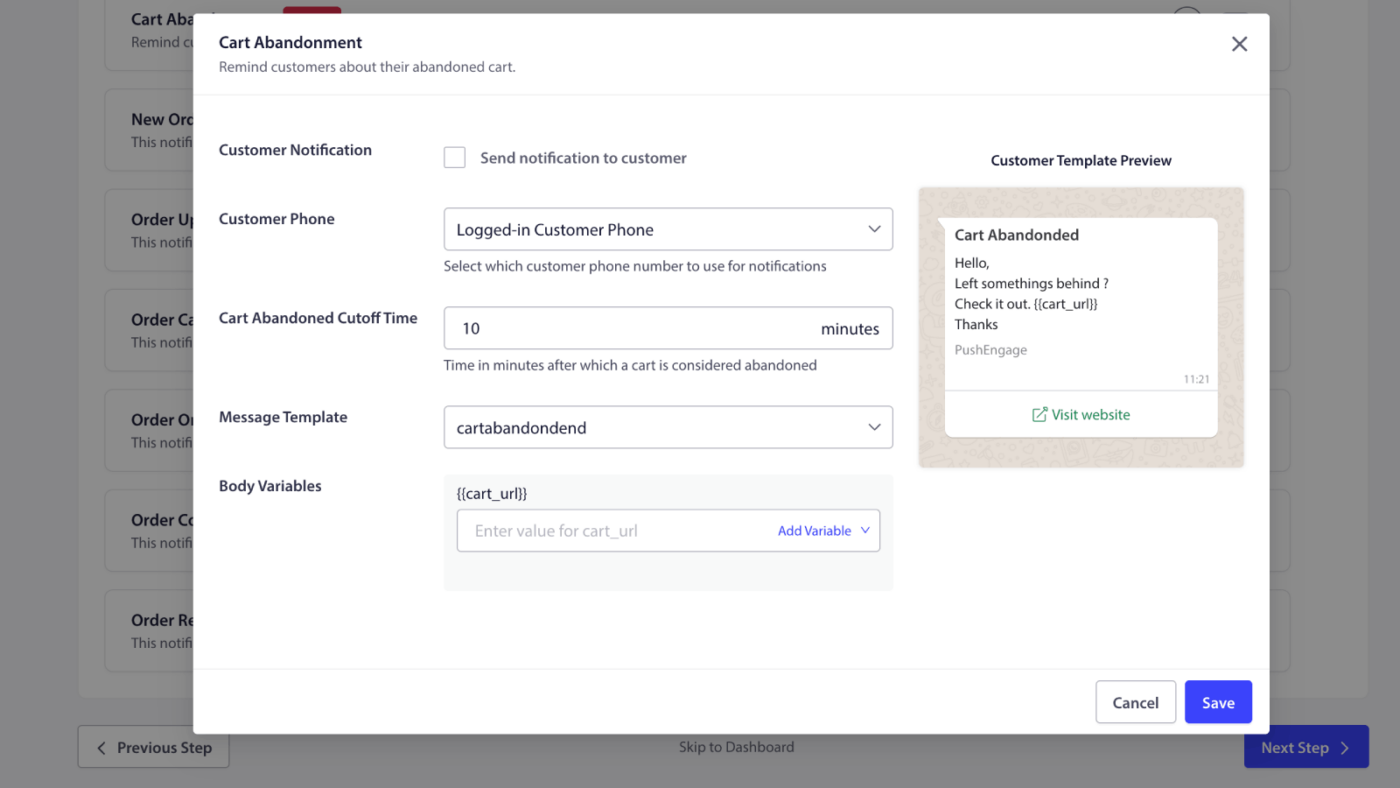
Imaginez la baleine qui s'échappe dont nous avons parlé plus tôt. Ils ont supprimé le jeu il y a trois semaines, donc les notifications push de l'application sont mortes. Mais ils consultent toujours le site du classement sur ordinateur, où ils ont accepté les notifications push web il y a des mois. Votre message de reconquête y parvient. Si cela reste sans réponse et qu'ils sont de grande valeur, le troisième message leur parvient sur WhatsApp, où vous avez configuré WhatsApp comme canal de réengagement. Le joueur qui était invisible pour votre canal principal vient de recevoir deux messages pertinents sur des canaux qu'il utilise toujours.
Les mécanismes qui rendent cela sûr sont une identité d'abonné unique et un plafond de fréquence unique sur les trois canaux, de sorte que le même joueur inactif n'est pas sollicité sur le push web et WhatsApp pour le même événement. Cette orchestration inter-canaux — la capacité de contacter un joueur sur les notifications WhatsApp lorsque le jeton de l'application a disparu — est ce qu'un outil à canal unique ne peut structurellement pas faire. C'est aussi pourquoi un programme de reconquête construit sur des canaux détenus atteint une part matériellement plus importante de votre public inactif qu'un programme construit uniquement sur le push de l'application.
Mesurez l'incrémentalité, pas le taux de retour
Le taux de retour flatte chaque campagne de reconquête, car certains joueurs inactifs allaient revenir d'eux-mêmes. Si vous les comptez comme des gains, vous sur-attribuerez le mérite à la campagne et continuerez à dépenser pour des messages qui n'ont rien fait. La mesure honnête est l'incrémentalité : mettez de côté une tranche aléatoire du segment inactif, ne leur envoyez rien et comparez leur taux de retour à celui du groupe ayant reçu le message. La différence est ce que votre reconquête a réellement causé.
Réengagement de joueurs dont vous pouvez prouver qu'il a causé le retour
Du côté de la valeur, la chaîne à instrumenter s'exécute ainsi : message délivré → le joueur relance → session réactivée → achat en jeu ou revenus publicitaires → LTV sur 30 jours récupérée. Un message de reconquête qui ramène une baleine qui s'échappe et qui reprend ensuite ses dépenses n'est pas une métrique d'engagement légère ; c'est une ligne de LTV récupérée que vous pouvez attribuer à un canal et à un message spécifiques. Lorsque vous pouvez montrer que le troisième message sur WhatsApp a récupéré, disons, 7 200 $ de dépenses réactivées pour un coût d'envoi quasi nul, le programme se défend lors de la réunion budgétaire.
Reliez les deux et vous arrêtez d'optimiser pour « nous avons atteint 31 000 joueurs » et commencez à optimiser pour « nous avons provoqué 2 400 retours incrémentaux d'une valeur de X $ en LTV récupérée ». C'est le chiffre qui transforme le réengagement des joueurs d'une simple case à cocher en un programme financé.
Les chiffres : un joueur de retour coûte une fraction d'une nouvelle installation
Reconquérez les joueurs inactifs pour une fraction du coût d'acquisition
Tout ce qui précède s'additionne pour une comparaison. Une nouvelle installation entraîne des dépenses d'acquisition d'utilisateurs complètes, une enchère publicitaire plus les frais de magasin plus tout le parcours, et doit encore survivre aux mêmes falaises D7 et D30 à partir de zéro. Un joueur inactif que vous atteignez sur le push web ou WhatsApp entraîne un coût d'envoi incrémental quasi nul et connaît déjà le jeu. La réactivation d'un abonné détenu est l'une des unités de croissance les moins chères qu'un studio possède, ce qui explique exactement pourquoi le canal sur lequel vous les atteignez décide si cette croissance est disponible ou non.
Le modèle de tarification devrait récompenser cela. PushEngage facture uniquement les abonnés actifs, de sorte qu'une audience dormante que vous avez mise de côté et arrêtée de contacter n'augmente pas la facture comme le font les tarifs par message ou par taille de liste. Vous payez pour les joueurs que vous essayez activement de reconquérir, exécutez la séquence comme une campagne de relance pour reconquête, et laissez le reste se taire sans pénalité de coût. La même logique de rétention qui s'applique pour réengager les utilisateurs inactifs du site web s'applique ici, et elle s'inscrit dans la discipline plus large du réengagement client.
La leçon à retenir est étroite et mérite d'être répétée : les joueurs les plus susceptibles d'être reconquis sont ceux que les notifications push de l'application ne peuvent plus atteindre. Ainsi, la manière de réengager les joueurs inactifs est de les rencontrer sur les canaux détenus qui survivent à une désinstallation, avec une séquence segmentée par valeur qui se termine au moment où ils reviennent. Construisez-la une fois, mesurez-la sur l'incrémentalité, et reconquérez les joueurs perdus pour une fraction de ce qu'il en coûte d'en acheter de nouveaux.
Exécutez-le depuis votre assistant IA : tout dans ce playbook — la création du segment, la planification de la campagne, l'extraction des résultats — fonctionne via le serveur PushEngage MCP. Connectez Claude (ou tout assistant compatible MCP) à votre compte PushEngage une fois, puis décrivez la campagne et laissez-le cliquer. Voir auditer les campagnes goutte à goutte depuis votre assistant IA pour un exemple concret.
Prêt à atteindre les joueurs perdus que les notifications push de l'application ne peuvent pas atteindre ? Commencez avec le forfait payez uniquement pour les abonnés actifs et construisez votre première séquence de reconquête cette semaine.


