Un acheteur dans votre application mobile ajoute une veste au panier, reçoit un SMS, change d'application et ne revient jamais. Multipliez cela par chaque session de cette semaine et vous avez les mathématiques silencieuses de l'abandon de panier sur application mobile : la majorité des paniers d'applications meurent non pas parce que l'acheteur a dit non, mais parce que quelque chose a interrompu le oui. Votre séquence d'e-mails essaiera de les rattraper demain, dans une boîte de réception avec quarante concurrents. Vous avez une meilleure option : vous possédez leur écran de verrouillage.
Ce guide couvre la boucle complète de récupération par notifications push sur application : l'instrumentation du déclencheur d'abandon dans votre application, la séquence de trois messages avec les règles de synchronisation et de sortie, le texte de l'écran de verrouillage qui convertit, et l'attribution qui prouve les revenus récupérés.
Pourquoi les paniers d'applications s'abandonnent différemment
Les acheteurs d'applications abandonnent à des taux élevés pour une raison qui devrait vous rendre optimiste : l'interruption, pas le rejet. Les sessions mobiles sont courtes, fragmentées et constamment interrompues — une notification d'une autre application, un appel téléphonique, l'arrivée d'un train. L'acheteur qui a abandonné un panier d'application est l'un des segments à plus forte intention que vous ayez : ils ont installé votre application, accordé la permission de recevoir des notifications, et mis un produit spécifique dans un panier. Chaque étape de ce parcours était délibérée.
C'est ce qui rend le moment de la récupération décisif. Reprenez le fil dans l'heure et vous reprenez un achat interrompu. Attendez le digest d'e-mails de demain et vous recommencez un nouveau travail de persuasion à partir de zéro.
Pourquoi l'écran de verrouillage bat la boîte de réception pour la récupération
La récupération de panier par e-mail fonctionne — et atteint son maximum. Les e-mails arrivent dans une boîte de réception filtrée, consultée selon l'emploi du temps du lecteur, des heures après que l'intention se soit refroidie. Une notification push d'application atterrit sur l'écran de verrouillage quelques minutes après l'abandon, pendant que le produit est encore mentalement en main, et un seul clic renvoie directement au panier. Les commerçants qui superposent les notifications push d'application à une séquence d'e-mails existante constatent systématiquement que les deux canaux se complètent plutôt que de se cannibaliser : l'e-mail rattrape les chercheurs, le push rattrape les interrompus.
Étape 1 : Instrumenter le déclencheur d'abandon
Avec le SDK iOS PushEngage 1.0, la détection d'abandon est un événement personnalisé. Déclenchez un événement lorsque le panier reçoit un article, et laissez la logique d'attente et de vérification de la campagne faire le reste :
// When an item is added to the cart:
PushEngage.trackEvent(name: "cart_updated",
                      properties: [
                        "cart_value": 89.50,
                        "item_count": 2,
                        "top_item": "waxed-canvas-jacket"
                      ],
                      profileId: currentUserId,
                      provider: nil, eventType: nil) { _, _ in }

// When checkout completes — this is the exit signal:
PushEngage.trackEvent(name: "purchase_completed",
                      properties: ["order_value": 89.50],
                      profileId: currentUserId,
                      provider: nil, eventType: nil) { _, _ in }
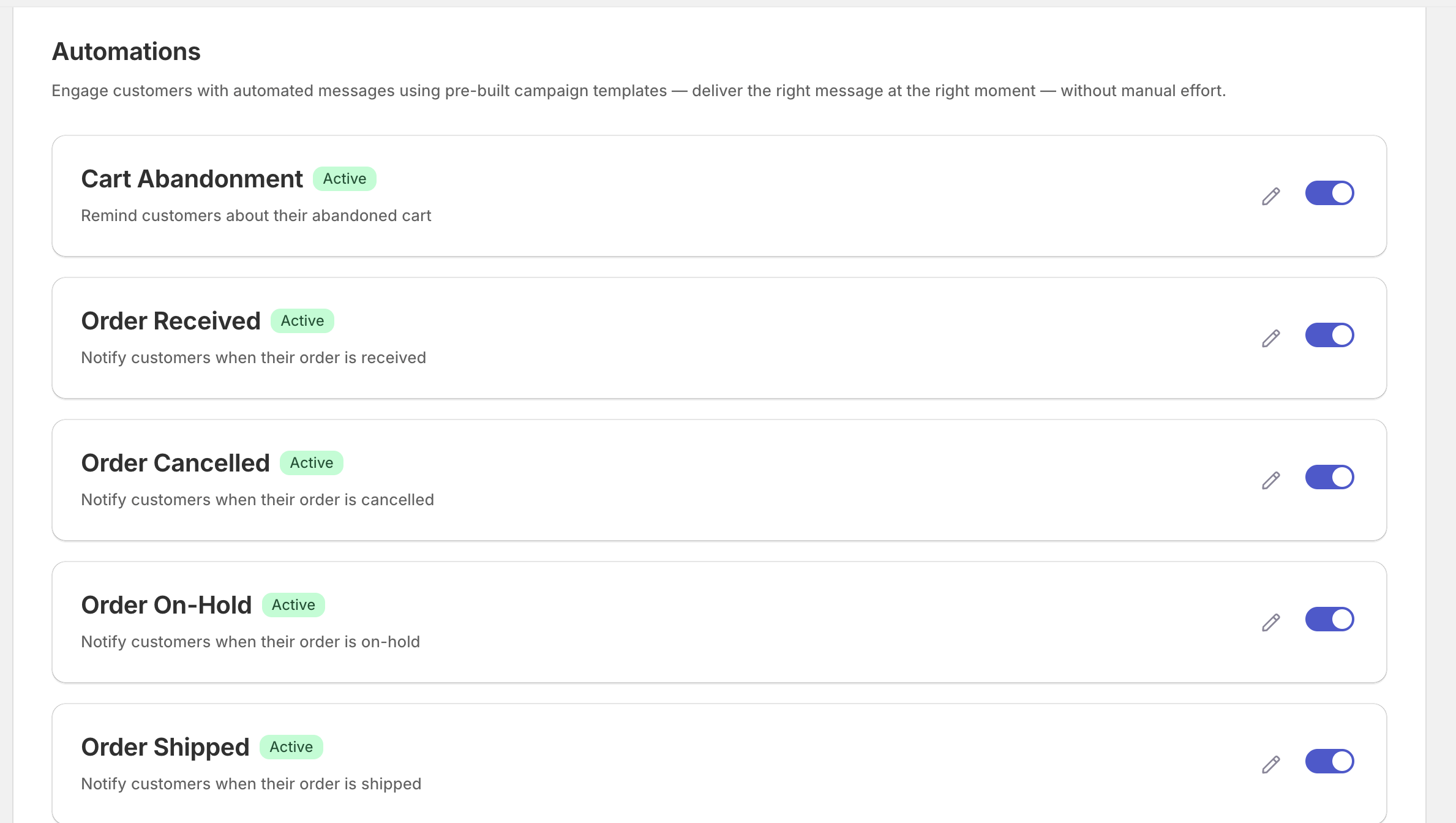
Deux événements, instrumentés une fois. À partir de là, la séquence de récupération est configurée dans le tableau de bord PushEngage en tant que campagne déclenchée — votre équipe marketing gère le timing, le texte et les offres sans autre développement.
Étape 2 : La séquence de trois messages
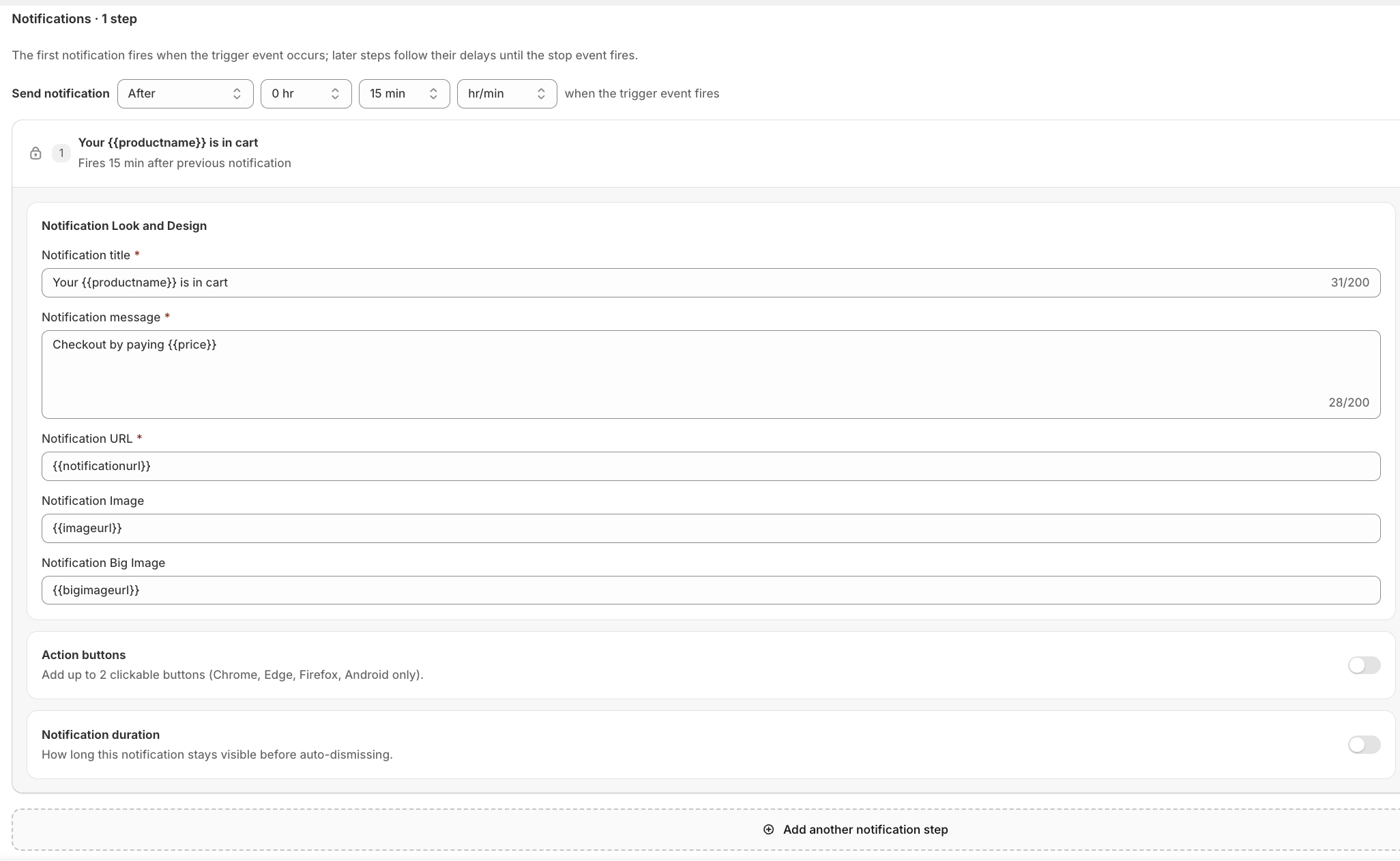
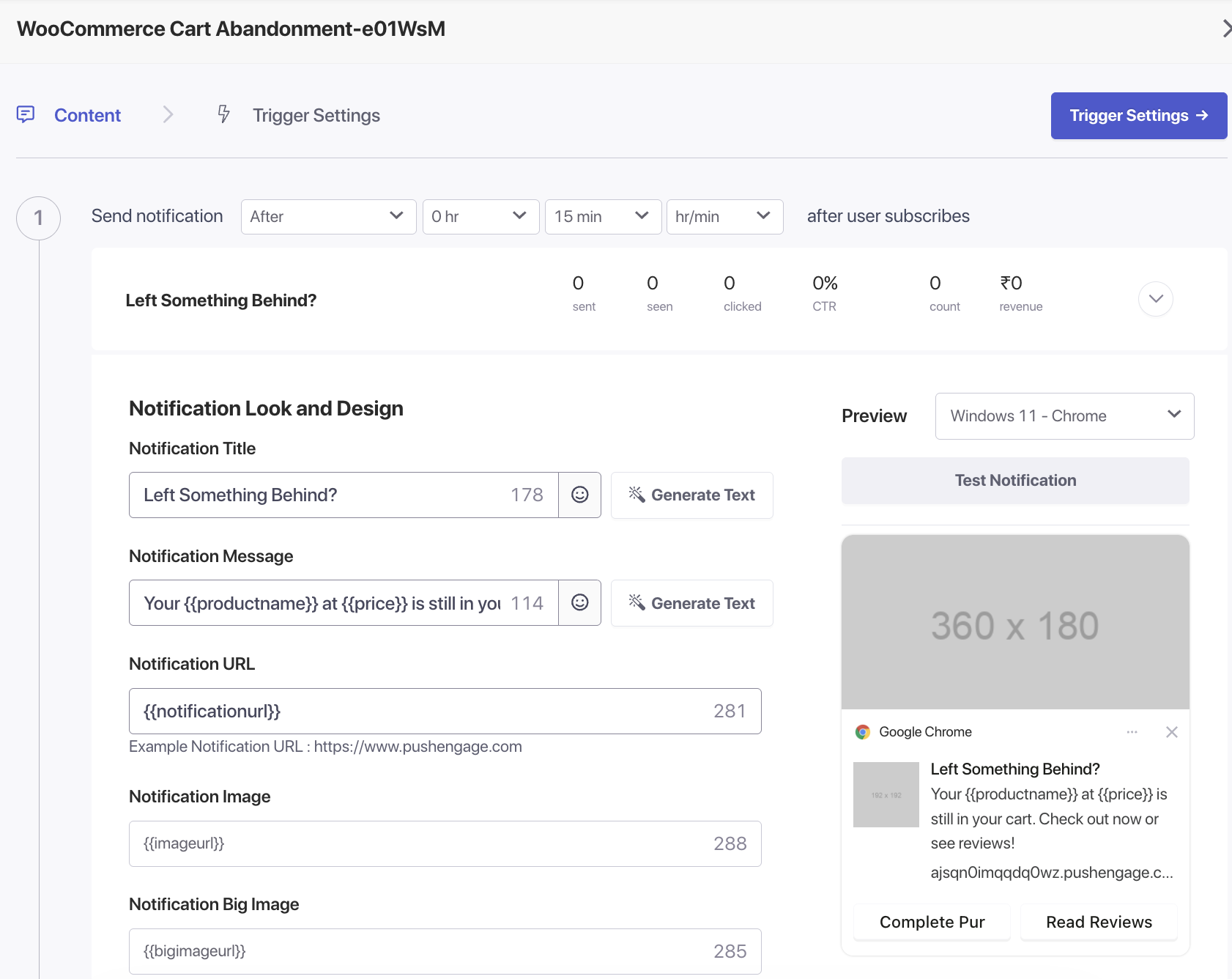
Message 1 — 30 minutes : le coup de pouce pour reprendre
Une notification riche avec l'image du produit, sans remise, sans pression. Le seul objectif est de reprendre la session interrompue : « Votre veste est toujours dans le panier. » Envoyez-la sous forme de notification riche afin que la photo du produit fasse la vente, et liez-la directement à l'écran du panier — pas à l'écran d'accueil.
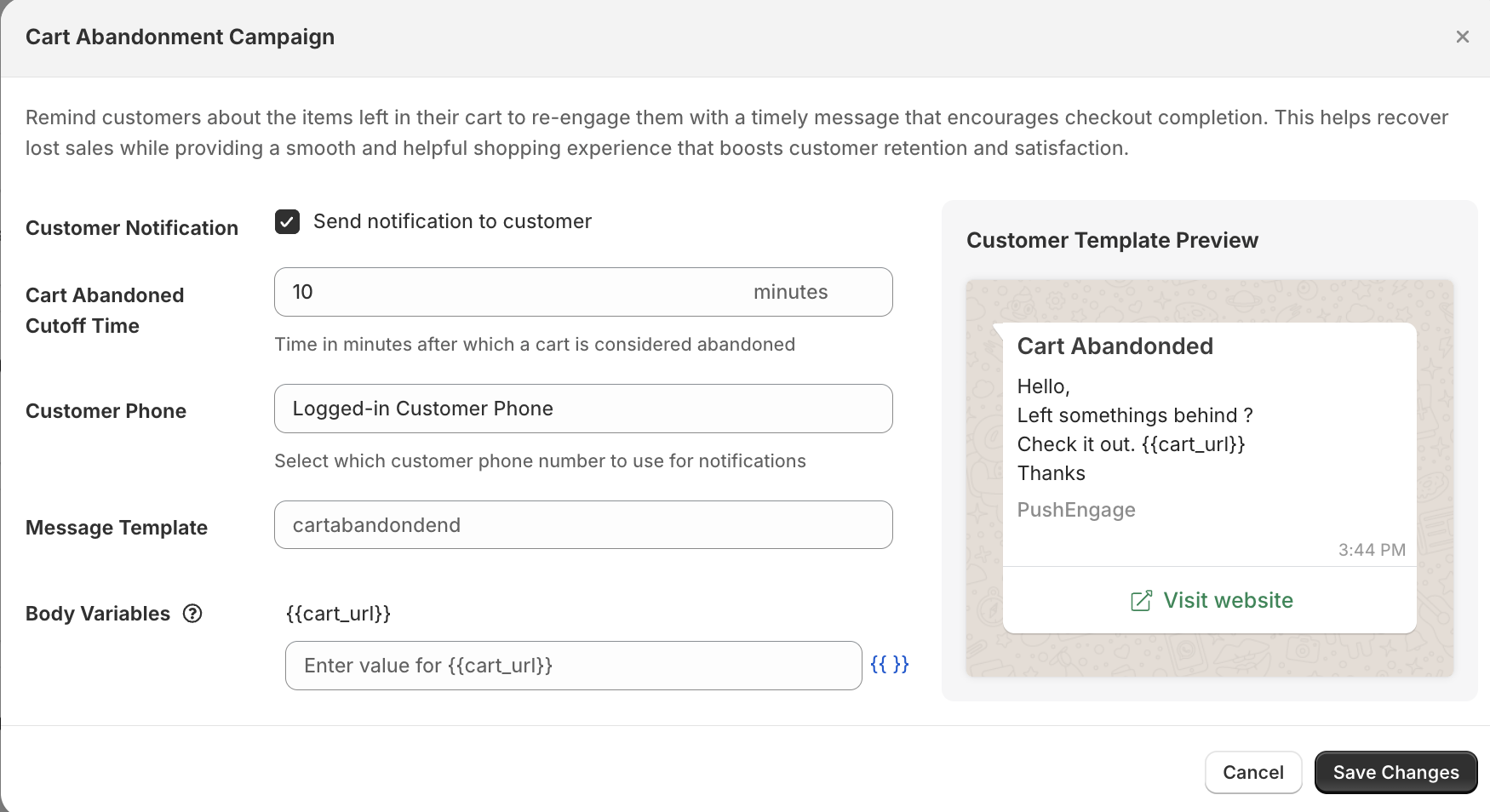
Message 2 — 24 heures : la raison de décider
Si le message 1 n’a pas converti, l’acheteur a besoin d’une raison, pas d’un rappel plus insistant. Une rareté honnête (« plus que 3 dans votre taille »), la preuve sociale ou des informations sur l’heure limite d’expédition fonctionnent, à condition qu’elles soient vraies. Les règles de crédibilité de notre guide sur l’urgence de récupération de panier s’appliquent doublement sur l’écran de verrouillage, où un compte à rebours bidon est à un clic de la désinstallation.
Message 3 — 72 heures : l’incitation, si vous pouvez vous le permettre
Le dernier message est le seul endroit où une remise est appropriée, et seulement si votre marge le permet. Les acheteurs apprennent vite : une remise dès le message 1 et vous avez appris à vos meilleurs clients à abandonner exprès. Limitez la séquence à trois messages et sortez.
La règle non négociable : chaque message vérifie d’abord la condition de sortie. Un achat, un panier vidé ou une désinscription met fin instantanément à la séquence. Rien ne détruit plus rapidement la confiance d’un abonné qu’une notification « votre panier vous manque » concernant une veste reçue hier.
Étape 3 : Écrire pour l’écran de verrouillage
Vous disposez d’environ un titre et une ligne avant la troncature. La spécificité l’emporte sur l’astuce, et le nom du produit l’emporte sur le nom de la marque :
- « Votre veste en toile cirée vous attend » / Un clic pour finaliser l’achat. — rappel de reprise, spécifique au produit
- « Plus que 3 en taille M » / Votre panier en contient une. — rareté honnête, message 2
- « -10 % sur ce qu’il y a dans votre panier » / Se termine ce soir. Cliquez pour finaliser l’achat. — clôture par incitation, message 3
Étape 4 : Lien profond vers le panier, pas vers l’application
Chaque clic doit aboutir à l’écran du panier avec les articles intacts, à un clic du paiement. Une notification de récupération qui ouvre l’écran d’accueil ajoute des frictions au moment précis où vous avez promis de les supprimer. Le gestionnaire d’ouverture de notification du SDK achemine chaque campagne vers le bon écran — notre guide sur les liens profonds couvre la configuration pour les deux plateformes.
Étape 5 : Comptez l’argent, pas les clics
Le taux de clics vous indique que le texte a fonctionné. Les revenus récupérés vous indiquent que la séquence a fonctionné. Attachez le suivi des objectifs à la séquence afin que chaque paiement complété dans la fenêtre d’attribution crédite la campagne, message par message — vous constaterez généralement que le message 1 génère le plus de volume et que le message 3 cause le plus de dommages à la marge, ce sont exactement les données dont vous avez besoin pour ajuster l’incitation. Définissez les revenus de la séquence comme le chiffre que votre équipe examine chaque semaine.
Expédiez-la cette semaine
Exécutez-le depuis votre assistant IA : tout dans ce playbook — la création du segment, la planification de la campagne, l'extraction des résultats — fonctionne via le serveur PushEngage MCP. Connectez Claude (ou tout assistant compatible MCP) à votre compte PushEngage une fois, puis décrivez la campagne et laissez-le cliquer. Voir auditer les campagnes goutte à goutte depuis votre assistant IA pour un exemple concret.
Deux événements suivis dans l’application, une campagne déclenchée dans le tableau de bord, trois messages avec des règles de sortie. Si votre application a un volume de panier significatif, c’est l’après-midi le plus rentable que votre équipe passera ce trimestre — et parce que les prix n’augmentent qu’avec le nombre d’abonnés actifs, la séquence coûte le même prix, qu’elle récupère dix paniers ou dix mille. Commencez par le guide de marketing par notifications push pour applications pour une vision stratégique complète, ou allez directement au guide de configuration et instrumentez les événements dès aujourd’hui.


