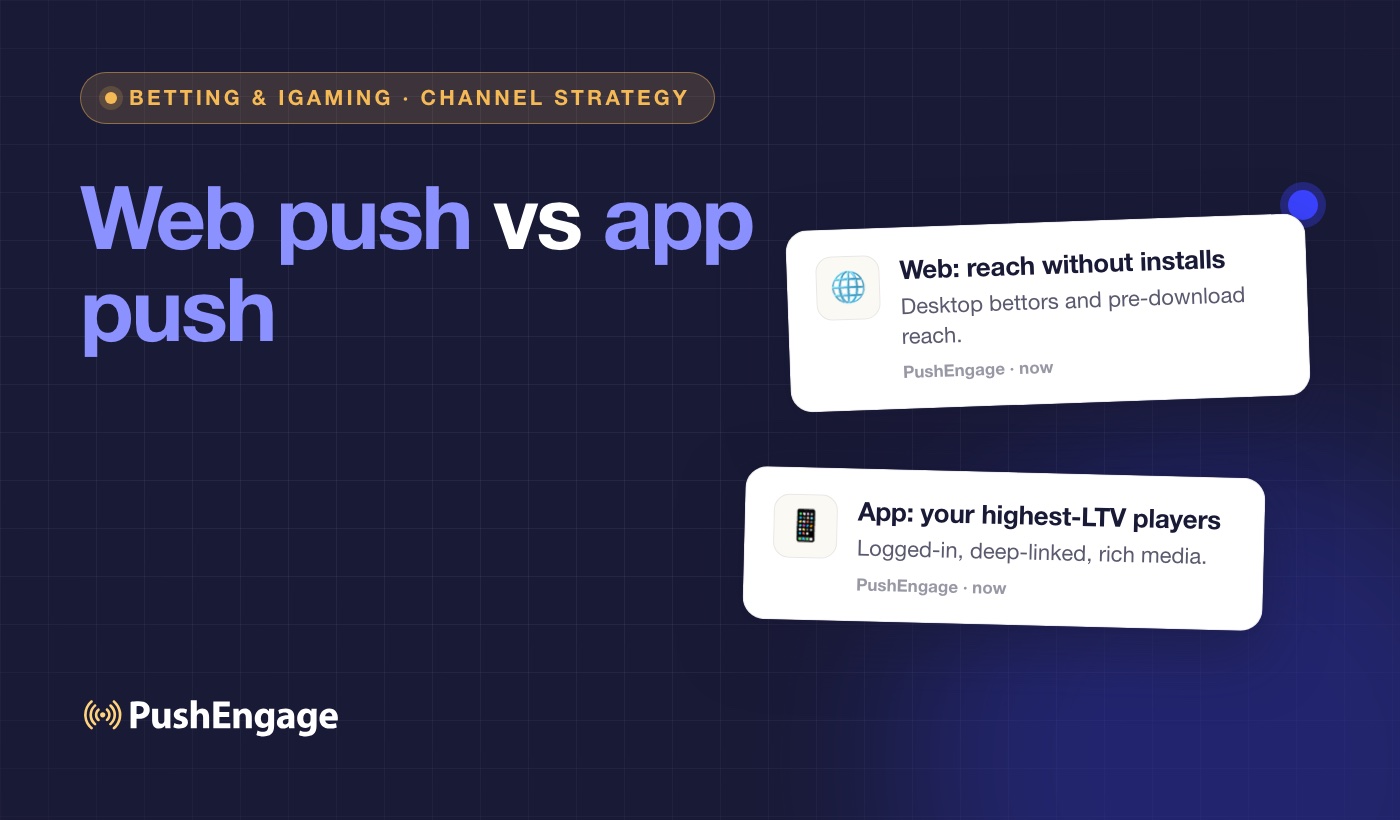
تدير علامة تجارية لرهانات رياضية أو كازينو لديها موقع ويب وتطبيق أصلي، وميزانية واحدة للإشعارات. لذا فإن سؤال إشعارات الويب مقابل إشعارات التطبيق ليس أكاديميًا: فهو يحدد أين تذهب جهود فريق الهندسة لديك، واللاعبين الذين يمكنك الوصول إليهم في يوم المباراة، وماذا يحدث لقائمتك في المرة القادمة التي تتحرك فيها سياسة نطاق أو متجر تطبيقات تحتك. معظم مقارنات القناتين مكتوبة لمسوقي التطبيقات بشكل عام. هذه المقارنة تقيّم كل صف مقابل واقع المشغلين: زمن استجابة الاحتمالات المباشرة، مسار ما قبل التنزيل، نطاقات محفظة العلامة التجارية، واحتكاك إلغاء التثبيت. (للحصول على مشهد أوسع للقنوات، انظر مقارنتنا العامة لـ إشعارات الدفع مقابل الإشعارات داخل التطبيق.)
الإجابة القصيرة مقدمًا: تغطي هاتان القناتان نقاط ضعف بعضهما البعض، والمشغلون الذين يعاملونهما كمنافسين ينتهي بهم الأمر عادةً بقائمتين غير مكتملتين. بقية هذا الدليل هي الإجابة الطويلة، حتى تتمكن من اتخاذ القرار عن قصد.
قناتان، عقدان مختلفان مع اللاعب
تضع كلتا القناتين رسالة على شاشة ينظر إليها اللاعب بالفعل. ينتهي التشابه هناك، لأن اللاعب وافق على أشياء مختلفة في كل حالة.
ما هي إشعارات الويب
إشعارات الويب هي إشعارات دفع المتصفح. ينقر الزائر على "السماح" مرة واحدة على موقعك، ويسجل المتصفح عامل خدمة ضد نطاقك، وتمتلك هذا الاتصال. لا يتطلب تثبيتًا، ولا متجر تطبيقات، ولا تنزيلًا. يعمل الاشتراك على سطح المكتب وأندرويد في كروم، فايرفوكس، إيدج، وغيرها، وتصل الرسالة سواء كان موقعك مفتوحًا أم لا.
هذا النقرة الواحدة هي اقتصاديات القناة في صورة مصغرة: أوسع مسار ممكن، بأقل التزام ممكن. يمكن لزائر لأول مرة يقارن الاحتمالات أن يصبح قابلاً للوصول إليه قبل أن ينشئ حسابًا.
ما هي إشعارات التطبيق
إشعارات التطبيق هي إشعارات دفع الهاتف المحمول الأصلية، يتم تسليمها عبر APNs من Apple و FCM من Google عبر SDK داخل تطبيقك. قام اللاعب بعملية التزام من خطوتين: قام بتثبيت تطبيقك، ثم قبل مطالبة إذن النظام. هذا حاجز أعلى بكثير من نقرة المتصفح، ويظهر في التفاعل. مشترك إشعارات التطبيق هو، بحكم التعريف تقريبًا، لاعب يريدك على شاشته المقفلة.
احتكاك الاشتراك في إشعارات الدفع: نقرة واحدة مقابل تثبيت
حاجز الاشتراك في إشعارات الدفع هو الانقسام الحقيقي بين القناتين. يطلب إشعارات الويب نقرة واحدة من زائر قد لا يعود أبدًا؛ يطلب إشعارات التطبيق تثبيتًا بالإضافة إلى مطالبة النظام. لذا فإن التأطير الصادق ليس "أي قناة أفضل" بل "أي عقد يحمله كل شريحة من اللاعبين معك". حركة المرور العرضية وقبل التسجيل تحمل عقد المتصفح. منتظموك الذين يقومون بالإيداع يحملون عقد التطبيق.
إشعارات الويب مقابل إشعارات التطبيق: جدول مقارنة المشغلين
هنا القرار بأكمله على شاشة واحدة، مع حقائق المنصة لعام 2026 التي تغيرها بتاريخ.
| البعد | دفع الويب | إشعار التطبيق |
|---|---|---|
| الوصول | أي شخص في متصفح حديث، بما في ذلك سطح المكتب. لا يتطلب تثبيتًا. | فقط اللاعبون الذين قاموا بتثبيت التطبيق وقبلوا المطالبة. |
| احتكاك الموافقة على إشعارات الدفع | نقرة واحدة على المتصفح (أو مطالبة من خطوتين تتحكم فيها). | التثبيت + إذن النظام. أعلى احتكاك، أعلى نية. |
| واقع iOS | فقط لتطبيقات الويب المثبتة على الشاشة الرئيسية منذ iOS 16.4 (مارس 2023). يتطلب الدفع الويب التصريحي (Safari 18.4، ربيع 2025) عرض إشعار لكل دفعة. | وصول كامل على كل آيفون عبر APNs. |
| الاعتماد على النطاق | الاشتراك مرتبط بالمصدر الذي تم إنشاؤه عليه. | لا شيء. الرموز تنتمي إلى بيانات اعتماد APNs/FCM الخاصة بك، وليس أي نطاق. |
| خطر إلغاء التثبيت | يبقى بعد إلغاء تثبيت التطبيق بالكامل. يقوم Chrome بإلغاء التفويض تلقائيًا للمصادر ذات المشاركة المنخفضة والحجم الكبير (تم الإعلان عنه في أكتوبر 2025). | إلغاء التثبيت يقتل الرمز الصامت. لا يوجد حدث، لا وداع. |
| كمون الاحتمالات المباشرة | ثوانٍ. ولكن المصادر التي يصنفها Chrome على أنها "مزعجة" يتم تحديدها بـ 1000 دفعة في الدقيقة (مباشر منذ يناير 2026). | ثوانٍ. حدود FCM لكل جهاز (240/دقيقة)، وليس لكل مرسل. |
| أساس التكلفة | لا يوجد تطبيق لبنائه أو صيانته. لا توجد رسوم لكل رسالة. | يفترض وجود تطبيق تقوم ببنائه وصيانته وإبقائه في المتاجر بالفعل. |
صفان يستحقان نظرة ثانية. صف الكمون أولاً: يقوم Chrome الآن بتصنيف كل مصدر إرسال يوميًا بناءً على الرسائل المرسلة في الدقيقة من انتباه المستخدم، ويتم تحديد المصدر المميز بـ 1000 دفعة في الدقيقة. بهذا المعدل، تستغرق دفعة بداية المباراة لـ 500,000 مشترك أكثر من ثماني ساعات. المرسلون المقسمون ليسوا الهدف، ولكن المرسلون الذين يبثون كل شيء هم الهدف، وإرسالات يوم المباراة هي بالضبط المكان الذي يؤثر فيه التقييد.
صف iOS ثانيًا: الدفع عبر الويب على iOS موجود فقط داخل تطبيقات الويب المثبتة على الشاشة الرئيسية، والتي لم يقم معظم لاعبيك بتثبيتها. إذا كان جمهورك يميل إلى iPhone، فإن الدفع عبر الويب وحده يترك معظمهم غير قابل للوصول على الهاتف المحمول. يعمل تبريد الإشعارات في Android 16 (يونيو 2025) على مستوى الإشعارات، لذا فمن خلال الآلية يجب أن يضغط على كلا القناتين بالتساوي - استنتاج بدلاً من بيان رسمي موثق، ولكنه افتراض تخطيط آمن. الدفعات السريعة يتم كتمها تدريجيًا، لذا قد لا يتم رؤية الإشعار الثالث في غضون خمس دقائق على أي من القناتين.
متى تفوز إشعارات الدفع عبر الويب
أربع حالات، كلها شائعة في هذا المجال، حيث تكون إشعارات الدفع عبر الويب هي الخطوة الأولى الصحيحة.
ليس لديك تطبيق، أو تطبيقك عالق في المراجعة. تواجه التطبيقات الأصلية في هذه الفئة جداول زمنية طويلة وغير مؤكدة للمتاجر في العديد من الأسواق. إشعارات الدفع عبر الويب لا تحتاج إلى أي من ذلك: مقتطف على موقعك، وحملتك الأولى ترسل في نفس اليوم. إنها أسرع طريقة للانتقال من لا شيء إلى قناة إعادة مشاركة مملوكة، وهذا هو سبب بدء دليل الاحتفاظ بمواقع المراهنات هناك.
المراهنون لديك على سطح المكتب. سلوك يوم المباراة متعدد الشاشات: البث على التلفزيون، والكتاب المفتوح في علامة تبويب المتصفح. دفع التطبيق لا يمكنه الوصول إلى سطح المكتب. تذكير ببدء المباراة أو إشعار بتسوية الرهان على الشاشة الثانية يصل إلى اللاعب في اللحظة الدقيقة التي يمكنه التصرف فيها.
قمع التنزيل المسبق. كل مستخدم مستقبلي للتطبيق هو زائر ويب أولاً. الموافقة على إشعار دفع على الموقع تجعل هذا الزائر قابلاً للوصول إليه قبل تثبيته، وتصبح القناة بعد ذلك سطح حملة التثبيت الأفضل لديك: أنت تعرف بالفعل ما يتصفحونه، لذا يمكن أن يكون إشعار الدفع "احصل على التطبيق" محدداً بدلاً من عام.
استعادة التطبيق الذي تم إلغاء تثبيته. هذه هي النقطة العمياء التي لا يأخذها أحد في الاعتبار. عندما يقوم لاعب بإلغاء تثبيت تطبيقك، يموت الرمز بصمت ويذهب دفع التطبيق إلى الظلام إلى الأبد. اشتراك دفع الويب الخاص بهم لا يهتم. ينجو اشتراك المتصفح من إلغاء التثبيت، مما يجعله قناة الدفع الوحيدة التي يمكنها تشغيل الاستعادة.
عندما تفوز إشعارات دفع التطبيق
وأربع مواقف تكون فيها إشعارات دفع التطبيق جديرة بالحصول على سعر اكتساب أعلى.
اللاعبون المسجلون ذوو القيمة العمرية العالية. جلسات التطبيق هي جلسات مصادق عليها. هذا يعني أن إشعارات دفع التطبيق يمكن أن تستند إلى هوية حقيقية: مستوى الإيداع، الدوري المفضل، تاريخ الرهان، حداثة الجلسة. يمكن لدفع الويب تقسيم السلوك أيضًا، ولكن الرسم البياني لهوية التطبيق أغنى افتراضيًا. بالنسبة للاعبين الذين يقودون معظم إيراداتك، فإن هذا العمق يفوز.
الروابط العميقة. يمكن لإشعار دفع التطبيق أن يوصل اللاعب إلى قسيمة رهان، أو سوق معين، أو خطوة KYC غير مكتملة، في نقرتين. يؤدي النقر على دفع الويب إلى عنوان URL، وهو قوي ولكنه سطحي. عندما يكون الهدف هو "إنهاء الشيء الذي بدأته"، فإن الرابط العميق هو الفرق بين دفعة وإجراء مكتمل.
الوسائط الغنية والإجراءات. تحمل الإشعارات الأصلية صورًا وتخطيطات موسعة وأزرار إجراءات مع مفاجآت عرض أقل من نظيرتها في المتصفح. تبدو مطالبات السحب وتحديثات النتائج المباشرة أفضل في الوضع الأصلي.
الوصول إلى iOS. الحاسم. يصل APNs إلى كل لاعب iPhone قام بالموافقة. بالنسبة لكتاب يعتمد بشكل كبير على iPhone، فإن هذا وحده يبرر قناة التطبيق، و دليل الإعداد إلى الاحتفاظ لتطبيقات المراهنات يتناول إعداده بشكل صحيح.
قابلية النقل: دفع الويب مرتبط بالأصل، إشعارات دفع الهاتف المحمول تسافر معك
فرق هيكلي واحد يهم أكثر كلما طالت مدة تشغيلك، لأنه يقرر ما تحتفظ به عندما تتغير الأمور.
يتم إنشاء اشتراك دفع الويب مقابل أصل واحد بالضبط. قم بتشغيل محفظة متعددة العلامات التجارية، أو نطاقات إقليمية، أو ترحيل مخطط له، وكل أصل هو عالم مشترك خاص به ما لم تقم بالبناء حوله. الحل هو ربط الاشتراكات بـ أصل واحد مستقر عبر نطاقات متعددة حتى تتراكم القائمة بدلاً من التفتت. اختيار المورد يتشكل أيضًا حسب الأصل: الإذن ينتمي إلى نطاقك، وليس إلى مزودك، وهذا هو السبب في أنه يمكنك تبديل مزودي إشعارات الدفع دون مطالبة بإعادة الإذن، ولماذا الاشتراكات التي تم جمعها على نطاق فرعي للمورد هي الشيء الوحيد الذي لا يمكن لأحد نقله.
لا يوجد مرساة مماثلة لإشعارات الدفع عبر الهاتف المحمول. شهادات APNs موجودة في حساب مطور Apple الخاص بك؛ مشروع FCM الخاص بك موجود في وحدة تحكم Google الخاصة بك. الرموز ملكك، ويمكن تصديرها بوضوح، و ترحيل تطبيق iOS بعيدًا عن الإرسال المستند إلى Firebase لا يتطلب إعادة تثبيت ولا مطالبة ثانية. قم بتدوير نطاقات الويب كما تشاء؛ جمهور تطبيقك لا يلاحظ أبدًا.
الخلاصة للمشغل: إشعارات الدفع عبر الهاتف المحمول هي الأصل الأكثر قابلية للنقل، ويصبح دفع الويب دائمًا فقط عندما تمتلك أصل الاشتراك. قم بإعداد كليهما بشكل متعمد ولن تكلفك أي هجرة أو إعادة تسمية قائمة.
لماذا يجب تشغيل إشعارات الدفع الخاصة بالألعاب عبر الإنترنت من لوحة تحكم واحدة
بحلول الآن أصبح النمط مرئيًا: كل ضعف في عمود واحد من الجدول هو قوة في العمود الآخر. دفع الويب لديه وصول ولا احتكاك في التثبيت؛ دفع التطبيق لديه عمق و iOS. الويب ينجو من عمليات إلغاء التثبيت؛ التطبيق ينجو من تغييرات النطاق. تشغيل قناة واحدة يعني قبول نقطة العمى الخاصة بها على أنها دائمة.
ومع ذلك، فإن تشغيل كليهما من أدوات منفصلة يخلق مشكلة مختلفة: يصبح نفس اللاعب سجلين. لا تتحدث حدود التردد مع بعضها البعض، لذلك يحصل أفضل عميل لديك على عرض الديربي مرتين. وفشل وضع المقامرة المسؤولة أسوأ من وضع التسويق. يجب كبت اللاعب الذي اختار استبعاد نفسه في كل مكان دفعة واحدة. في مكدس معزول، يتم وضع الكبت على قائمة الويب بينما يستمر رمز التطبيق في الإطلاق. هذا ليس اكتشاف تدقيق افتراضي؛ إنه السلوك الافتراضي لأداتين غير متصلتين.
هذه هي الحالة الصادقة لإشعارات الدفع الخاصة بالألعاب عبر الإنترنت التي تعمل من لوحة تحكم واحدة مع شرائح موحدة، وهذا هو ما تم بناء PushEngage من أجله: دفع الويب والتطبيق على هوية مشترك واحدة، وشرائح مشتركة، وحدود تردد عبر القنوات، وساعات هادئة، وقائمة كبت واحدة تحترمها كلتا القناتين. لا توجد صياغة إلحاح على مطالبات الإيداع ولا استعادة أرباح مطاردة الخسارة هي قرارات حملة، ولكنها لا تصمد إلا إذا قامت كل قناة بفرضها معًا.
الحجم ليس هو السؤال هنا. أرسلت مواقع المراهنات والألعاب على PushEngage أكثر من 3.5 مليار إشعار. ما يفصل المشغلين داخل هذا الحجم هو الاستهداف: يرى مرسل موقع المراهنات المتوسط ~ 2.1٪ CTR على الإشعارات التي تم عرضها؛ العشرة الأوائل يحققون 6.9٪ - حوالي ثلاثة أضعاف. هذه الفجوة هي فجوة استهداف، وليست فجوة قناة، والشرائح الموحدة عبر كلتا القناتين هي كيفية سدها.
أي قناة دفع يجب أن يبنيها مشغل المراهنات أولاً؟
إذا أخذت شيئًا واحدًا من هذه المقارنة بين دفع الويب مقابل دفع التطبيق، فخذ قواعد القرار بدلاً من حكم.
| وضعك | ابدأ بـ |
|---|---|
| لا يوجد تطبيق بعد، أو التطبيق قيد المراجعة | دفع الويب، اليوم |
| جمهور يركز على سطح المكتب أو جمهور التسجيل المسبق | دفع الويب |
| جمهور يركز على iPhone، تم تثبيت التطبيق | إشعار التطبيق |
| عملاء منتظمون ذوو قيمة عالية مسجلون الدخول | دفع التطبيق، مرتبط بعمق |
| محفظة علامات تجارية متعددة أو هجرة قادمة | دفع الويب على أصل مستقر، بالإضافة إلى دفع التطبيق |
| كلتا القناتين، بائعان | دمج في لوحة تحكم واحدة |
بالنسبة لمعظم المشغلين، فإن الحالة النهائية لبرنامج إشعارات الدفع الخاصة بالألعاب عبر الإنترنت هي كلتا القناتين، وهوية مشترك واحدة، ومجموعة واحدة من الشرائح، وقائمة كبت واحدة. لا تحل أي قناة محل الأخرى؛ كل واحدة تغطي وضع فشل الأخرى.
قم بتشغيله من مساعد الذكاء الاصطناعي الخاص بك: كل شيء في دليل التشغيل هذا - بناء الشريحة، وجدولة الحملة، وسحب النتائج - يعمل من خلال خادم PushEngage MCP. قم بتوصيل Claude (أو أي مساعد متوافق مع MCP) بحساب PushEngage الخاص بك مرة واحدة، ثم صف الحملة ودعه يقوم بالنقر. انظر إرسال إشعارات الدفع من مساعد الذكاء الاصطناعي الخاص بك للحصول على مثال عملي.
إذا كنت ترغب في رؤية كيف يبدو ذلك عمليًا، فإن إشعارات الدفع عبر التطبيق على PushEngage تعمل جنبًا إلى جنب مع الدفع عبر الويب من نفس منشئ الحملة، ويعتمد التسعير على المشتركين النشطين، لذا فإن قاعدة التثبيت الخاملة لا تضخم الفاتورة. كل خطة مدفوعة تأتي مع ضمان استعادة الأموال لمدة 14 يومًا، مما يعني أنه يمكنك إثبات إعداد القناة المزدوجة على حركة المرور الخاصة بك قبل أن يكون القرار نهائيًا.


