Your subscribers are telling you.
Segments that
listen.
Every page view, cart event, and purchase sorts subscribers into living segments automatically. Campaigns target what people do, not what a stale export says they did.

“The ability to tailor your target audience is particularly impressive as you are able to increase your engagement rates as you use the software.” Alex Avery · Database Marketing Executive
75,000+ businesses Set up in minutes, no engineering ticket 14-day money-back guarantee

Trusted by 75,000+ businesses in 150+ countries








Why it works
Behavior is the only honest survey.
Subscribers won’t fill out preference centers, but they browse, cart, and buy every day. That’s the data segments should run on.
Auto-segment on page visits
Visitors who browse a category join its segment automatically. The sneaker crowd hears about sneakers; nobody hears about everything.
Purchase-history cohorts
First-time buyers, repeat customers, and VIPs each get their own treatment, built from real order data via the store integration.
Combine with audience groups
Stack behavior, geography, device, and attributes into precise retargeting groups, without exports or spreadsheets.
How it works
From click trail to targeted campaign.

Segments that fire campaigns
Behavior doesn’t just sort subscribers; it triggers action. A category browse can start a nurture sequence the same minute it happens.
- Behavioral triggers on any tracked action
- Google Tag Manager events supported
- START and STOP conditions per campaign
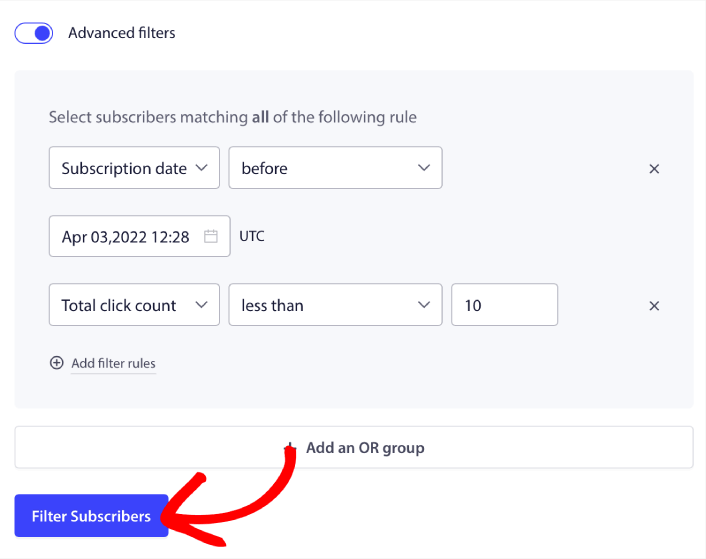
Judge segments by revenue
Goal tracking reports engagement and revenue per segment, so the cohorts that convert get the budget and the ones that don’t get new messaging.
- Revenue and engagement per segment
- A/B test per cohort, Premium and up
- Segments shared across web, app, and WhatsApp
What’s included
Exactly what you’re buying, on one dashboard.
Segments that build themselves from on-site actions mean campaigns fire on what people did, not what you guessed. Across every channel they subscribed on.
Behavior-built segments
URL patterns, viewed categories, scroll depth, and time on page define the cohort. The segment updates itself as subscribers match or leave the criteria.
See behavior segmentsDynamic segmentation engine
Behavior segments are one dimension of a broader engine that also uses geo, device, language, and custom attributes.
Dynamic segmentationBehavior-triggered campaigns
When a subscriber enters a behavior segment, it can fire a campaign automatically at the intent window.
Triggered notificationsPersonalization
The same behavior signals that define the segment can populate the notification copy with relevant product or content references.
PersonalizationWorkflows
Segment-entry journeys: when a subscriber enters the “viewed three products, no cart” segment, the workflow fires.
Explore WorkflowsBrowse abandonment as the canonical example
The viewed-product segment is the starting point for browse abandonment recovery, the most high-value behavior trigger in eCommerce.
Browse abandonmentApp custom events
In-app events from iOS, Android, React Native, and Flutter SDKs feed segment definitions on the same platform.
App push overvieweCommerce integrations
Segments from store behavior. Shopify and WooCommerce events feed the engine.
Viewed category, cart state, and purchase history from Shopify and WooCommerce feed behavior segment definitions automatically.

Shopify & Shopify Plus
The native app for high-volume stores: cart and browse recovery, back-in-stock and price-drop alerts, and revenue attribution. Installed in an afternoon, not a 12-week integration cycle.
Explore the Shopify Plus app
WooCommerce
Launch cart recovery and order campaigns directly from your WordPress admin. Two clicks, same-hour first campaign.
WooCommerce cart recoveryDeep eCommerce integrations
Store events power every channel: cart, browse, price-drop, back-in-stock, and order updates wired from one connection.
See eCommerce integrations
HubSpot
Trigger push from HubSpot lists and events.
HubSpot integrationREST API & webhooks
Every console operation available as a documented endpoint. No dashboard lock-in.
API documentationThe numbers
Relevance scales. Noise doesn’t.
“PushEngage is quick and easy to implement. The ability to tailor your target audience is particularly impressive as you are able to increase your engagement rates as you use the software.”
Alex Avery
Database Marketing Executive
Related
More from the segmentation toolkit.
Dynamic segmentation
Behavior is one dimension of the full segmentation engine.
Dynamic segmentationTriggered notifications
Segment entry fires campaigns automatically at the intent window.
Triggered notificationsBrowse abandonment
The viewed-product segment powering the most high-value eCommerce trigger.
Browse abandonmentPersonalization
Behavior signals populate notification copy with relevant product references.
PersonalizationFAQ
Questions, answered.
How is this different from dynamic segmentation?
It’s the behavioral layer of it. Dynamic segmentation covers geo, device, and attributes; behavior segments add the action stream — visits, carts, purchases — and connect it to triggers that fire campaigns in real time.
Do I need to tag my site?
Store platforms wire the key events automatically. Anything custom rides Google Tag Manager or one documented API call per event.
How current are the segments?
Live. A subscriber joins the cart-abandoner segment the minute they abandon and leaves it the minute they buy.
What does it cost?
You pay only for active subscribers. Audience groups start on the Business plan; deeper analytics arrive at Premium. Paid plans carry a 14-day money-back guarantee.
Target what they do, not what you guess.
Set up in minutes. If PushEngage isn’t the best fit within 14 days, we refund 100%. No questions asked.
Free plan available Set up in minutes Pay only for active subscribers