Salı günkü elde tutma incelemenizde yeni bir satır öğesi var. Shopify Plus mağazanızdaki 120.000 web anlık bildirim abonesinin tamamına gönderilen Pazartesi günkü toplu gönderi, Ocak ayında temiz bir şekilde teslim edildi. Bu hafta, bunun bir kısmı hiç ulaşmadı ve gönderi başına teslimatın biraz daha düştüğünü gösteren gösterge tablosu. Bu arada iki yıl önce ayarladığınız sepeti terk etme tetikleyicisi her zamanki gibi çalışmaya devam ediyor: gönderi hacminizin %4'ü, anlık bildirimle ilişkilendirilen gelirin üçte biri.
Bu boşluk bir raporlama hatası değil. Bu bir politika. Google, 2026'da Chrome ve Android'in bildirimleri nasıl ele aldığını yeniden düzenledi ve tetiklenen anlık bildirimler her değişikliğin kazanan tarafı: toplu gönderiler erişim kaybeder, tetikleyiciler kazanır. Bu yazı, nelerin değiştiğini, arkasındaki teslim edilebilirlik ve gelir matematiğini ve programınız hala toplu gönderi odaklıysa göndermeniz gereken ilk tetikleyici kampanyaları ele alıyor.
Google, 2026'da gönderi listenizi ikiye ayırdı
Üç platform değişikliği, tek bir yön.
Chrome artık ısrarcı göndericileri hız sınırlamasına tabi tutuyor. Ocak 2026'dan itibaren Chrome, sitelerinde geçirdikleri zamana kıyasla yoğun gönderim yapan siteler için Anlık API mesaj hız sınırlarını uygulamaya başladı. Chrome, her gönderen kaynağı günlük olarak üç faktöre göre puanlar: gönderilen anlık mesaj sayısı / sitede geçirilen zaman, sitede geçirilen zamana göre gösterilen izin istemleri ve kullanıcının kendi sitesiyle etkileşimi. Testte başarısız olursanız Chrome web anlık bildirim hız sınırları gönderilerinizi sınırlar ve sınırın üzerindeki istekler HTTP 429 hatasıyla reddedilir. Google'ın kendi ifadesi açık: "zamanında, ilgili ve ilgi çekici bildirimler" gönderenler bunu fark etmeyecek. Megafonlar fark edecek.
Android 16, promosyon anlık bildirimlerini sessize alıyor. Bildirim Düzenleyici, bildirim içeriğini okumak ve varsayılan olarak filtrelenen Promosyonlar veya Haberler olarak sınıflandırdıklarını otomatik olarak sessize almak için cihazdaki yapay zekayı kullanır. Sınıflandırma uygulama başına değil, bildirim başına yapılır, bu nedenle uygulamanızdan gelen bir promosyon toplu gönderisi, işlem mesajlarınız sorunsuz bir şekilde ilerlese bile gizlenir.
Android 17, canlı bildirimlere öncelikli yer veriyor. I/O 2026'da duyurulan ve şu anda kullanıma sunulan Canlı Güncellemeler, gerçekten canlı bildirimleri bildirim çekmecesinin, kilit ekranının ve durum çubuğu çipinin en üstüne sabitler. Google'ın geliştirici belgeleri neyin uygun olmadığını açıkça belirtiyor: "reklamlar, promosyonlar, sohbet mesajları, uyarılar." Promosyon toplu gönderinizi sessize alan aynı şirket, sipariş takip güncellemeniz için premium bir yüzey oluşturdu.
RCS İş Mesajlaşması, I/O 2026'da doğrulanmış gönderen markalaması ve düşük itibarlı promosyon göndericileri için günlük limitlerle aynı duruşu benimsedi. Desen her yerde devam ediyor: platformlar tüm bildirimleri eşit görmeyi bıraktı ve tetiklenen tarafı seçtiler.
Tetiklenen bir anlık bildirimi daha iyi zamanlanmış bir toplu gönderiden ayıran nedir
Çalışan bir tanım, çünkü sektör bunları sürekli bulanıklaştırıyor. Tetiklenen bir anlık bildirim, o abonenin bir şey yapması nedeniyle bir abone için gönderilir. Bir giriş koşulu (olay), abone başına durum (sepetleri, göz attıkları kategori, son siparişleri) ve bir çıkış koşulu (satın aldılar, tıkladılar, pencere süresi doldu) vardır. Davranış tabanlı anlık bildirimler, takvimden ziyade bu abone başına olaylardan oluşturulan kampanyalardır.
Bu tanım düşündüğünüzden daha fazlasını dışlar:
| Kampanya sınıfı | Neyi tetikler | Neyi durdurur | Platformlar bunu 2026'da nasıl ele alıyor |
|---|---|---|---|
| Zamanlanmış toplu gönderim | Bir takvim tarihi | Hiçbir şey; herkese gönderir | Hacim etkileşimi geçerse kısıtlanır; Android'de Promosyonlar olarak sessize alınır |
| Segmentlere ayrılmış toplu gönderim | Filtrelenmiş bir listeye gönderilen bir takvim tarihi | Abone başına hiçbir şey | Daha iyi etkileşim matematiği, hacimde aynı yapısal risk |
| Tetiklenmiş kampanya | Bir abonenin eylemi (sepeti terk etme, göz atılan üründe fiyat düşüşü) | Bir çıkış koşulu: satın alma, tıklama veya süre dolumu | Abone başına düşük hacim, etkileşim açısından zengin; tasarıma göre Chrome'un testini geçer |
| Canlı güncelleme | Devam eden, kullanıcı tarafından başlatılan bir olay (sipariş yolda) | Olayın bitişi | Android 17'nin kilit ekranında ve durum çubuğunda premium yerleşim |
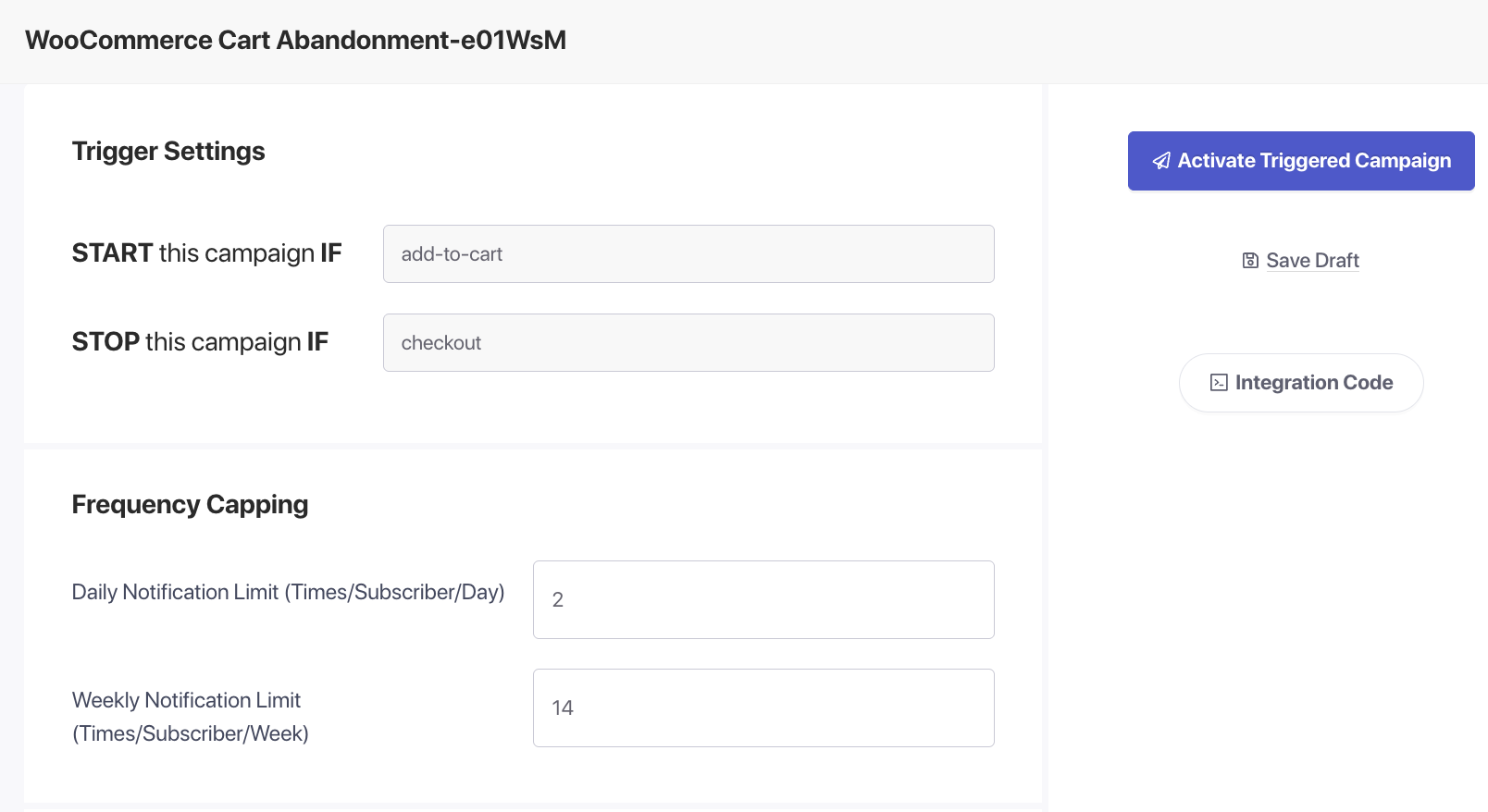
Daha akıllı zamanlamayla günlük bir "fırsatlar" gönderisi hala toplu gönderimdir. Zamanlama yazılımı sınıfını değiştiremez; yalnızca abone davranışına bağlı bir giriş koşulu bunu yapabilir. PushEngage'deki Tetiklenmiş bildirimler tam olarak bu şekilde, yani gönderim zamanı optimizasyonları yerine olayla tetiklenen, giriş ve çıkış koşullarına sahip akışlar olarak tanımlanır.
Teslim edilebilirlik matematiği: Chrome sizin megafon olduğunuzu nasıl anlar
Chrome'un hız sınırı puanlaması, yönetebileceğiniz bir kesirdir. Payda, ne kadar gönderdiğinizdir. Payda ise sitenizin ne kadar ilgi topladığıdır: site etkileşim puanı artı abonelerin orada geçirdiği gerçek dakikalar, gönderen kaynak başına günlük olarak hesaplanır.
Toplu gönderimler tanım gereği payı şişirir. Aylardır ziyaret etmemiş ve etkileşim paydanızı sıfıra yakın tutan uzun kuyruk dahil olmak üzere her abone gönderiyi alır. Tetiklenmiş kampanyalar oranı tersine çevirir: mesaj alan tek aboneler, yeni ziyaret etmiş, göz atmış veya sepete eklemiş olanlardır, bu da etkileşimlerinin yapı gereği taze olduğu anlamına gelir.
Ceza merdiveni, olumsuz sonuçları somutlaştırır. İşaretlenen bir gün 1 günlük hız sınırı kazandırır. İkinci işaretlenen gün bunu 7 güne uzatır. Üçüncüsü 14 gün yapar ve yalnızca 42 ardışık iyi davranışlı günden sonra liste temizlenir. Sınırlandırılmış bir site dakikada 1.000 anlık bildirimle sınırlıdır ve sınırın ötesindeki her şey HTTP 429 döndürür.
Senaryoyu 100.000 aboneli bir mağazada çalıştırın. Kasım ortasında merdiveni tetikleyen günlük bir toplu e-posta programı, Kara Cuma'yı dakikada 1.000 mesajla sınırlar, flaş satış itmesini saniyeler yerine saatlere yayarak izler. Açıklayıcı matematik: itme, normal bir satış haftasında 40.000 $ sepet geliri elde ederse, teslimatı yarıya indiren kısıtlanmış bir hafta yaklaşık 20.000 $ gelir risk altına sokar. Yan taraftaki tetikleyici öncelikli program, Chrome web itme hızı sınırları megafon desenini hedeflediği için asla radara girmez, gerçek anlamda etkileşimli göndericilerin hacmini değil.
İki dürüst uyarı. Sınırlar, Bildirimler API'si için değil, arka plan Anlık Bildirim API'si için geçerlidir ve Google, sitelerin neredeyse tamamının etkilenmeyeceğini beklemektedir. Ancak “neredeyse tüm siteler” tüm web genelinde ölçülmektedir. Günlük toplu gönderimler yapan yüksek hacimli E-ticaret göndericileri, politikanın tanımladığı kohorttur. PushEngage, 150'den fazla ülkede 500 milyardan fazla bildirim göndermiştir ve en çok maruz kalan göndericiler, tüm programlarının bir takvim olduğu göndericilerdir.
Gönderi başına gelir: tetiklenen vs. toplu e-postanın ekonomisi
Etkileşim çarpanları bu kategoride her yerdedir; gelir matematiği daha nadirdir. PushEngage'ın kendi platform verileri, kişiselleştirilmiş tetiklenen kampanyalarda açılma oranlarını hedeflenmeyen gönderilere göre yaklaşık 4 kat daha fazla gösteriyor. Ancak bütçe incelemenize ulaşması gereken sayı, gönderi başına gelirdir.
Her biri 1.000 gönderi üzerinden açıklayıcı:
| Program | Gönderimler | Tıklama Oranı | Tıklamalarda Dönüşüm | Siparişler | 80 $ AOV ile Gelir |
|---|---|---|---|---|---|
| Günlük toplu gönderim | 1,000 | 1.5% | 5% | <1 | ~60 $ |
| Sepet terk etme tetikleyicisi | 1,000 | 12% | 25% | 30 | ~2.400 $ |
Fark belirgin değil ve gerçek dünya vakaları aynı yönde sonuçlanıyor. İngiliz futbol kulübü Charlton Athletic, PushEngage aracılığıyla sepet terk etme tetikleyicilerini gönderi başına %7,17 dönüşüm oranıyla çalıştırıyor. Saleduck'ın tetiklenen damla kampanyaları, yayın gönderilerine göre %400 daha yüksek açılma oranları elde ediyor. PushEngage, bildirimi gelir düzeyinde bildirdiği için her iki ekip de tıklamaları savunmak yerine her kampanyaya bir dolar rakamı koyabiliyor. Bu, bir satır öğesine sahip olmak ile bir satır öğesini açıklamak arasındaki farktır.
2026'daki asimetri bunu daha da keskinleştiriyor. Eskiden bir toplu gönderimin dezavantajı abonelikten çıkmalardı. Şimdi teslim edilebilirliği de harcıyor: düşük etkileşimli her gönderi, Chrome puanınızı merdivene doğru itiyor ve Android'in sınıflandırıcısını sizi Promosyonlar altına dosyalayacak şekilde eğitiyor. Toplu gönderim sadece gönderi başına daha az kazandırmıyor; gelecekteki her gönderiyi vergilendiriyor. Tetiklenen kampanyalar böyle bir vergi taşımaz ve kısıtlama tehdidinden sonra kalan en güvenli yüksek hacimli strateji, tetiklenen katmanınızı büyütmektir.
Hangi olaylar tetiklenen kampanyaları hak ediyor (ve hangileri etmiyor)
Her olay bir kampanya hak etmez. Otomatikleştirilmeye değer olaylar üç testi geçer:
- Niyet sinyali. Eylem bir satın alma veya bir ayrılma öngörür. Sepete eklenen bir ürün niyettir; kaydırılan bir ana sayfa gürültüdür.
- Bozulabilir pencere. Mesaj şimdi yarından daha değerlidir. Sepet içeriği bayatlar; fiyat indirimleri başkası tarafından satın alınır.
- Aboneler başına durum. Mesaj, şeyi adlandırabilir: ürün, fiyat, kategori. Her alıcı aynı metni alabiliyorsa, bu gizlenmiş bir toplu gönderimdir.
Bir e-ticaret mağazası için altı olay üçünü de geçer: sepeti terk etme, göz atma terk etme, fiyat düşüşü, stokta var, hoş geldin (kayıt olma olaydır) ve geri kazanma (olayın yokluğu, bir eşiği aşma). Bu altı olay aynı zamanda davranış tabanlı anlık bildirimlerin bir mühendislik projesi olmaktan çıktığı yerlerdir: her biri PushEngage İş Akışları'nda hazır bir şablon olarak gönderilir, böylece ekibiniz olay işlem hatları tasarlamak yerine zamanlamayı ve metni yapılandırır. Göz atma terk etme, hiç sepetine eklemeyen alışverişçileri kapsadığı için özel dikkat gerektirir; göz atma terk etme kampanyası stratejileri gönderimiz, kitleyi aşırı tetikleme yapmadan nasıl tanımlayacağınızı kapsar.
Çekirdek altı olayın ötesinde, kaydedilen öğe uyarıları, çapraz satış ve inceleme istekleri dahil olmak üzere tam menüyü istiyorsanız, e-ticaret için sekiz tetikleyici kampanya fikri gönderisi her birini örneklerle açıklar.
Çıkış kriterleri, gönderim sıklığı sınırları ve sessiz saatler artık erişiminizi koruyor
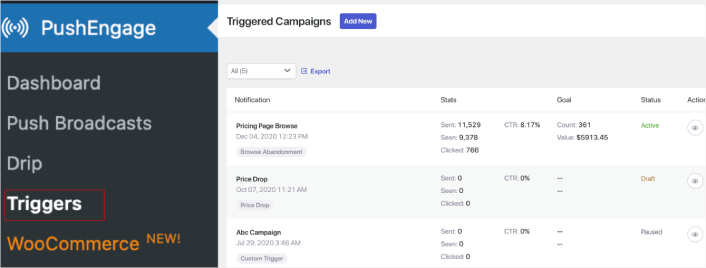
Kampanya hijyeni eskiden nezaketti. Etkileşim puanlı teslim edilebilirlik altında savunmadır ve her kontrol belirli bir platform mekanizmasına eşlenir.
- Çıkış koşulları, abone satın aldığında, tıkladığında veya pencere süresi dolduğunda bir diziyi durdurur. Gönderilen bitmiş bir dizinin göndermeye devam ettiği her mesaj, Chrome'un matematiğinde saf bir paydır: etkileşim şansı olmayan hacim.
- Gönderim sıklığı sınırları, tüm kampanyalarda haftalık toplam gönderimler için aboneye göre bir tavan belirler. Sınırlar, üç örtüşen tetikleyicinin tek seferde tek bir aboneye toplu gönderim hacmini yeniden oluşturmasını engelleyen şeydir.
- Sessiz saatler, sabah 3'te gelecek mesajları bekletir, bu saatlerde okunmamış olarak göz ardı edilirler. Varışta göz ardı edilme, Android bildirim sessizliğinin öğrendiği tam olarak düşük değerli desendir.
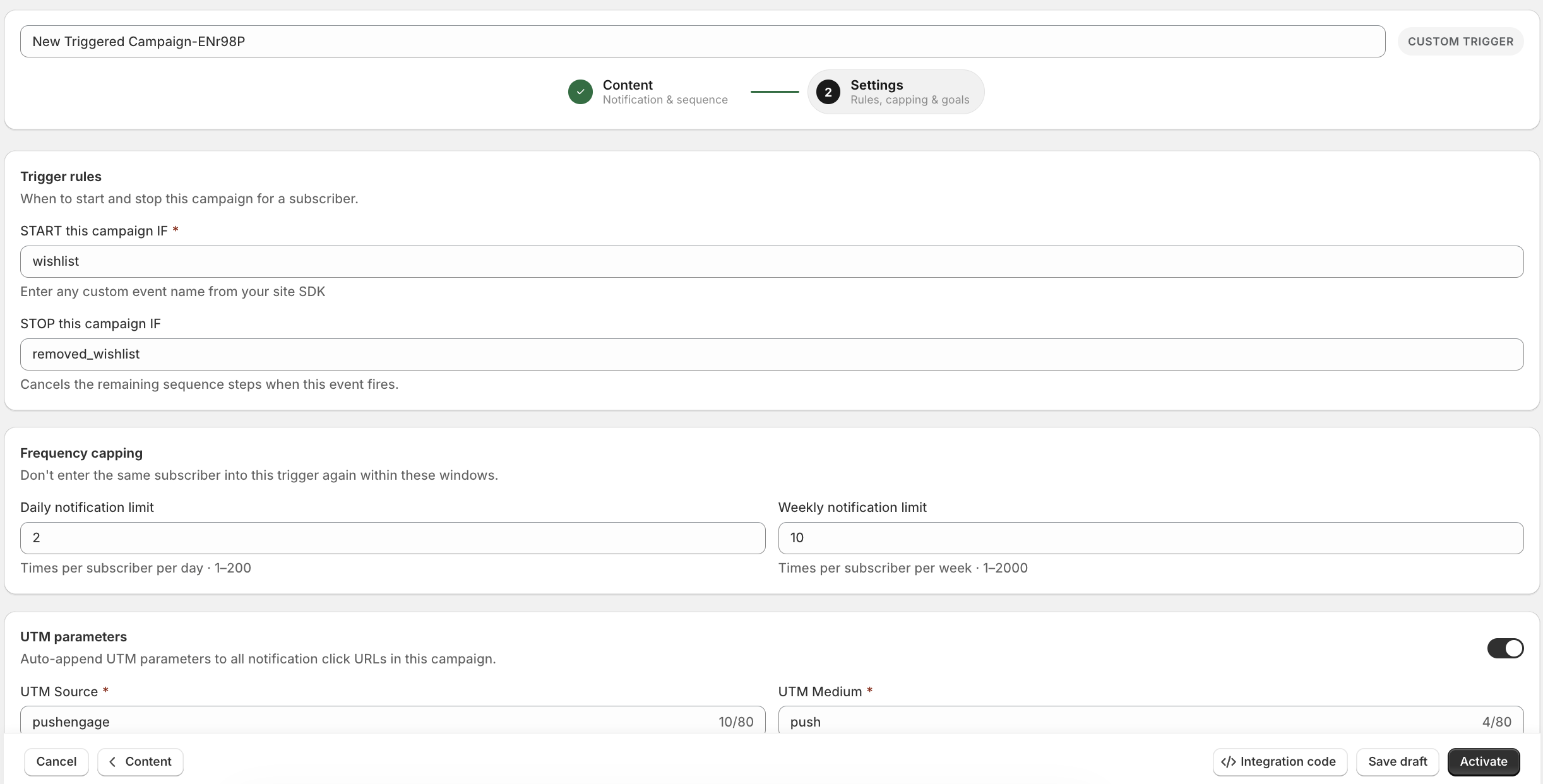
Kullanışlı varsayılanlar: her tetiklenmiş kampanya açık bir çıkış koşulu, aboneye göre haftalık gönderim sınırı olan tetiklenmemiş gönderiler ve her abonenin saat dilimine uyan sessiz saatlerle gönderilir. Buradaki özensizlik önce abonelikten çıkmalar olarak ortaya çıkar; anlık bildirim abonelikten çıkma oranınızı azaltma kılavuzumuz, platformlar sizin adınıza karar vermeden önceki uyarı işaretlerini kapsar.
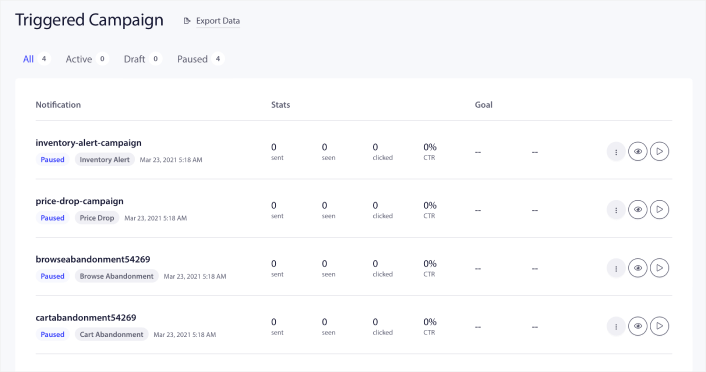
Tetiklenmiş kampanyalar yalnızca ateşlendikleri segmentler kadar iyidir
Bir tetikleyici, bir mesajın ne zaman ateşlendiğini yanıtlar. Bir segment, kimin uygun olduğunu yanıtlar. İkinci soruyu atlayın ve liste genelinde ateşlenen bir fiyat düşüşü tetikleyicisi, daha süslü bir giriş koşuluna sahip bir toplu gönderimdir.
Karşılaştırmayı çalıştırın. Herkese gönderilen bir fiyat düşüşü bildirimi, ürünü çoğunlukla hiç görmemiş 100.000 kişiye bir indirim duyurur. Son 30 gün içinde satın almadan o kategoride gezinen bir aboneler segmentinde tetiklenen aynı tetikleyici, reklam gibi okunan bir mesajla listenin küçük bir kısmına ulaşır. PushEngage'ın kendi sektörel araştırması, segmentasyonun sektörler genelinde tıklama oranlarını ikiye katladığını ve segment artı tetikleyicinin her iki yarının da bileşik olduğu yer olduğunu buldu.
Bunu tek bir platformda çalıştırmanın yapısal bir avantajı vardır. Web push, uygulama push, WhatsApp ve canlı sohbet her biri ayrı araçlarda yaşadığında, her aracın sıklık sınırı, abonenin aslında dört kanaldan gelen mesajlarla boğulmasına rağmen iyi olduğunu düşünür. Tek bir segmentasyon motoru ve tek bir abone kimliği, çapraz kanal sınırının uygulanmasını sağlar: fiyat düşüşü önce web push'ta tetiklenir ve yalnızca tıklamayan yüksek değerli segment WhatsApp takip mesajını alır. Segmentasyon, kendi başına bir teslim edilebilirlik gereksinimi haline gelmiştir ve bu argümanı neden push bildirim segmentasyonunun artık bir teslim edilebilirlik gereksinimi olduğu hakkındaki yardımcı yazımızda tam olarak ele alıyoruz.
Bu çeyrekte ne yayınlanacak: premium yerleştirme dönemi
Bölünmenin, çoğu push programının henüz fiyatlandırmadığı ikinci bir yarısı vardır. Android bildirim sessize alma promosyonları gömse de, Android 17'nin Canlı Güncellemeleri, gerçek zamanlı, kullanıcı tarafından başlatılan olayları izleyen bildirimlere kilit ekranı ve durum çubuğu yerleşimi sağlar. Google'ın I/O 2026 duyuruları, üç adede kadar canlı veri noktasını görüntüleyen bir Metrik Stili şablonuyla yüzeyi seyahat, sağlık ve zamanlayıcı kullanım durumlarına genişletti. Ticaret için, nitelikli olaylar zaten sipariş hattınızda oturuyor: teslimat takibi, sipariş durumu, kalan süreyi ve stok durumunu gösteren bir flaş satış geri sayımı. Promosyon patlamaları asla nitelik kazanamaz; Google'ın belgeleri onları isimleriyle hariç tutar. Tetiklenen bildirimler, nitelikli olaylar tanım gereği aboneyi başlattığı için bu yerleşime girebilecek tek mimaridir.
Çeyreğin somut çalışması:
- Son 30 günlük gönderilerinizi denetleyin. Her kampanyayı patlama, segmentli patlama veya tetiklenen olarak gruplandırın. Patlama öncelikli programlar tipik olarak hacimlerinin çoğunu ilk iki grupta ve push ile ilişkilendirilen gelirlerinin çoğunu üçüncü grupta bulur.
- İlk üç tetikleyici kampanyayı yayınlayın: sepeti terk etme, göz atmayı terk etme, karşılama. Her üçü de özel yapımlar yerine şablonlardan çalışır.
- Her yerde çıkış koşulları ve çapraz kanal sıklık sınırı ayarlayın, böylece artan tetiklenen hacim asla patlama düzenini yeniden oluşturmaz.
Tutma matematiği kapanış argümanıdır. Abonelik listeniz, edinme maliyetlerini zaten ödediğiniz bir varlıktır. Patlamalar şimdi bu varlığı iki kez harcıyor, bir kez abonelikten çıkmalarda ve bir kez de platform itibarı. Tetiklenen anlık bildirimler bunu artırır: her mesaj, bir abonenin niyet göstermesiyle ulaşır ve her tıklama, erişiminizi koruyan etkileşim puanını besler.
Ayda 30 günlük patlama gönderen bir mağaza, bir hafta içinde 1.000 mesaj/dakika hızında satış gönderisinin yavaşladığını izlemekten bir hafta uzakta işaretlenir. Bu patlamaları altı tetikleyici kampanyayla değiştiren mağaza, merdiveni hiç düşünmez ve anlık bildirim kaleminde geri kazanılan gelir okunur. Bu değişikliği yapmak, şablonlarla ve her kanalı içeren ücretsiz bir planla bir öğleden sonra sürer: 200 aboneye kadar, tetiklenen kampanyalar dahil olmak üzere başlamak için PushEngage fiyatlandırmasına bakın.


