De meeste operators beschouwen het app-publiek als een opgelost probleem. Die spelers hebben de app geïnstalleerd, meldingen geaccepteerd en storten regelmatig, dus de aandacht verschuift naar het werven van de volgende groep. Dat is omgekeerd. De spelers in je app zijn het segment met de hoogste LTV dat je bezit, en pushmeldingen voor gokapps zijn de retentie-ruggengraat die hen actief houdt. Gok- en gamingwebsites op PushEngage hebben meer dan 3,5 miljard meldingen verzonden, en het patroon binnen dat volume is consistent: operators die getriggerde, gesegmenteerde pushes verzenden, behouden hun basis, en operators die het bombarderen, laten hun lijst verloop lijden.
Dit artikel behandelt de volledige cyclus voor een sportsbook- of casino-app: APNs- en FCM-setup via een SDK, de campagne-patronen die alleen een app kan uitvoeren, de blinde vlek van de-installatie waar niemand over rapporteert, en de verzenddiscipline en regels voor verantwoord gokken die het kanaal gezond houden in 2026.
Je app-gebruikers zijn je spelers met de hoogste LTV: retentie van gokapps begint hier
Een webbezoeker doorloopt geen enkele verplichtingspoort. Een app-gebruiker doorloopt er twee: ze hebben je app geïnstalleerd en ze hebben een systeem-niveau toestemmingsprompt geaccepteerd. Elke abonnee op je app-pushlijst heeft een weloverwogen, dubbel bevestigde keuze gemaakt om van je te horen. Dat is een kwaliteitssignaal dat geen enkel webkanaal kan evenaren, en het blijkt direct uit betrokkenheid en stortingsgedrag.
Het publiek is ook structureel kleiner dan je webverkeer, wat precies de reden is waarom retentie van gokapps een eigen programma verdient. Je app-basis is misschien een tiende van de grootte van de maandelijkse bezoekers van je site, terwijl het de meerderheid van de stortingen genereert. Het verliezen van één app-gebruiker kost meer dan het verliezen van tien anonieme bezoekers, en het terugwinnen van één kost een fractie van het werven van een nieuwe storter via betaalde media.
App-push verdient zijn plaats in dat programma omdat het het vergrendelingsscherm bezit, het oppervlak met de hoogste aandacht op mobiel. De melding wordt afgeleverd, ongeacht of de app open, op de achtergrond of gesloten is. Als je retentieplan voor de webkant al loopt, is dit de tegenhanger aan de app-kant; zo niet, begin dan met onze playbook over pushmeldingen voor goksites en bouw beide. Retentie van gokapps en webretentie delen één segmentatie-brein, maar het zijn verschillende kanalen met verschillende regels.
APNs en FCM setup: de SDK-route naar je eerste verzending
Hier is het deel dat engineering zal waarderen: de inloggegevens die app-push aandrijven, waren altijd van jou. APNs-certificaten en -sleutels worden uitgegeven aan je Apple Developer-account. Je FCM-project leeft in je Google-console. Een push-leverancier is een laag bovenop infrastructuur die je bezit, wat betekent dat het toevoegen van een, of het wisselen van een, je abonneebestand niet in gevaar brengt.
Het setup-pad, per platform:
- iOS. Genereer een APNs-sleutel in uw Apple Developer-account, voeg de PushEngage Swift SDK toe, configureer de App Group en upload de sleutel naar het dashboard. De volledige handleiding staat in onze iOS pushmeldingen SDK-handleiding, en Apple's UserNotifications-documentatie behandelt de APNs-kant in detail.
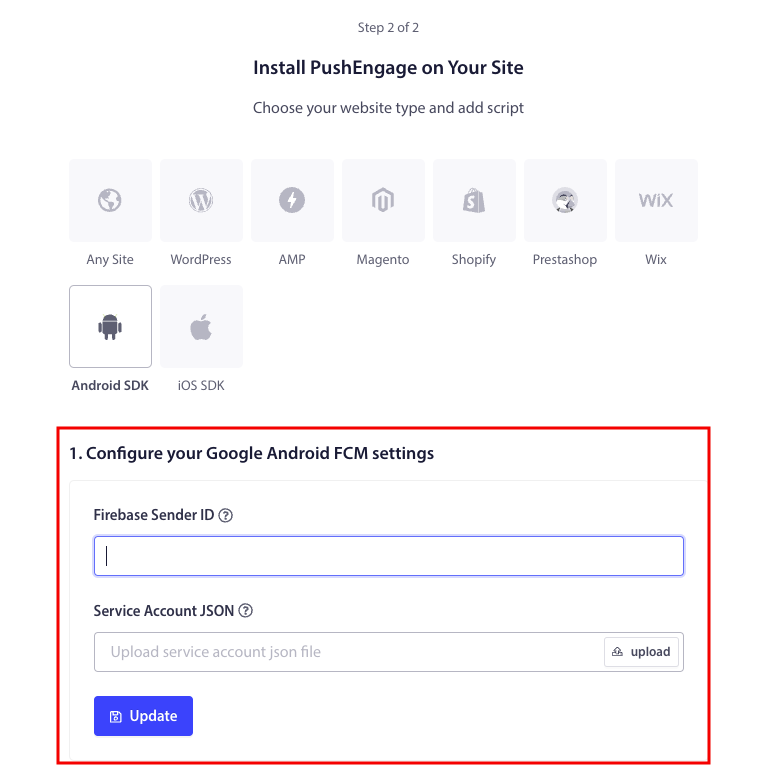
- Android. Verbind uw FCM-project en voeg de Android SDK (Kotlin of Java) toe. De levering blijft lopen via APNs en FCM; PushEngage voegt de targeting-, campagne- en attributielaag toe.
- Cross-platform. React Native en Flutter SDK's zijn bedoeld voor hybride teams, en een JavaScript SDK beheert webview-stacks. Een team dat een tweede platform toevoegt, heeft geen tweede leverancier nodig.
Verstuurt u al rechtstreeks via Firebase? U hoeft niets opnieuw op te bouwen. Bestaande FCM-tokens migreren schoon, gebruikers zien geen herinstallatie en geen tweede toestemmingsprompt, en de speler die twee jaar geleden meldingen heeft toegestaan, blijft ze ontvangen. De stapsgewijze instructies staan in onze handleiding voor migratie van FCM op iOS. Komt u van een andere betaalde leverancier? Apparaat-tokens exporteren en importeren schoon omdat ze in uw APNs- en FCM-naamruimte leven, niet die van de leverancier. Filter de import op tokens die binnen ongeveer 270 dagen actief waren (FCM behandelt oudere als verouderd) en volg het bredere proces in hoe u aanbieders van pushmeldingen kunt wisselen.
Na integratie is de taakverdeling duidelijk: engineering levert de SDK één keer, en het marketingteam beheert segmentatie, campagnes en analyses vanuit het dashboard. Elke consolebewerking is ook beschikbaar via de REST API, met webhooks voor leverings- en betrokkenheidgebeurtenissen, dus niets is afhankelijk van een mens die op knoppen klikt.
App-pushmeldingen versus webpush, in één paragraaf
App-pushmeldingen en webpush zijn verschillende kanalen die vergelijkbare kleding dragen. App-push vereist een native SDK en een systeemtoestemmingsprompt, bereikt het vergrendelingsscherm met de app gesloten, overleeft elke wijziging aan uw webdomeinen en sterft op het moment dat de app wordt verwijderd. Webpush vereist helemaal geen installatie, bereikt het grootste deel van uw publiek dat de app nooit zal downloaden, overleeft een verwijdering en leeft onder browserregels zoals Chrome's op betrokkenheid gebaseerde snelheidslimieten (live sinds januari 2026). Segmenteer ze afzonderlijk, stuur ze anders berichten, en beheer ze allemaal vanaf één plek. Later deze week publiceren we een volledige vergelijking van wanneer elk kanaal wint voor gok- en game-operators, dus beschouw deze paragraaf als de preview.
Campagnepatronen die pushmeldingen voor gokapps converteren
Algemeen advies voor app-betrokkenheid overleeft geen contact met een wedstrijddag. Wat pushmeldingen voor gokapps anders maakt, is dat de momenten die het waard zijn om te berichten scherp, tijdgebonden en gekoppeld aan geld in het spel zijn. Dit zijn de patronen die ermee overeenkomen.
| Trigger moment | Publiek | Voorbeeldpush | Deep link doel |
|---|---|---|---|
| Voor de wedstrijd, T−60 | Op teams getagde segmenten, actief 30 dagen | “Derby-odds zijn live. Stel je slip samen voordat de lijnen bewegen.” | Markt voor wedstrijdodds |
| Aftrap | Opt-ins voor live-waarschuwingen | “Het is live. Volgende doelpunten, kaarten, corners zijn open.” | Live-weergave |
| Cash-out venster | Open-slip houders | “Je slip is nog twee etappes verwijderd van winst. Cash-out of laat het doorlopen.” | Open weddenschap |
| Weddenschap afgewikkeld | De gokker | “Resultaten zijn binnen. Je winst staat op je saldo.” | Saldo + vanavond's kaart |
| Storting bevestigd | De stortende partij | “Je storting is bevestigd en beschikbaar.” | Account saldo |
| Afgebroken slip, 30 min | Slip afbrekers (aangepaste gebeurtenis) | “Je slip is nog open. De aftrap is om 20:00.” | Opgeslagen weddenschap |
Odds-waarschuwingen en score-updates met deep links naar de weddenschap
Odds-waarschuwingen zijn de kenmerkende app-campagne, en het vakmanschap zit in de landing, niet in de tekst. Een push die het startscherm van de app opent, dwingt de speler om de markt opnieuw te zoeken; elke extra tik vermindert de intentie. Deep links moeten de speler direct in de exacte markt plaatsen, of beter nog, in een vooraf ingevulde weddenschap. Dezelfde regel geldt voor score-updates: een push tijdens de rust moet de markten voor de tweede helft van die wedstrijd openen, niet een algemene live lobby.
Het tweede vakmanschap is publieksdiscipline. Pushmeldingen voor aftrap, rust en cash-out gaan alleen naar spelers die zich hebben aangemeld voor live-waarschuwingen of een open slip hebben, nooit naar de hele lijst. Odds-waarschuwingen naar een slapende casual gokker zijn ruis; voor een live gokker met geld op het spel zijn ze het product. Eén afhankelijkheid is van jou: live triggers vuren alleen wanneer je odds-feed of bet-state platform de gebeurtenis via de PushEngage API uitzendt. Het volledige pre-match-tot-afwikkelingsschema, met tijdvensters, staat in onze match-day push sequence post van vorige week.
Stortingsbevestigingen en sessieherstel
Transactionele pushes zijn de vertrouwenslaag. Storting bevestigd, opname verwerkt, weddenschap afgehandeld: dit zijn de berichten die spelers actief willen, ze trainen de gewoonte om meldingen aan te laten staan en ze verdienen de aandacht waarvoor je marketinguitgaven later worden gedaan. Stuur ze direct en houd ze feitelijk.
Sessieherstel is de stille winnaar. Vuur een aangepaste gebeurtenis af wanneer een speler een slip bouwt en vertrekt zonder te bevestigen, en een workflow stuurt 30 minuten later een push met deep links terug naar de opgeslagen slip. Dezelfde triggerlogica stuurt 'ga verder waar je gebleven was'-campagnes aan de casinokant aan, die we hebben behandeld in casino pushmeldingen. Custom-event triggers zitten op Growth-abonnementen en hoger; als je de hersteltekst wilt A/B-testen, zitten A/B-splitpaden op Premium-abonnementen en hoger.
De blinde vlek van de-installatie: wanneer tokens verlopen, is web push het herstelkanaal
App push heeft één structurele zwakte waar geen enkele leverancier het over heeft tijdens het verkooppraatje: de-installatie doodt het apparaattoken, stilzwijgend. Er is geen bounce-rapport en geen opt-out-gebeurtenis. Je stuurt naar 80.000 "abonnees", een deel van de verzendingen verdampt tegen dode tokens, en het dashboardnummer dat er het meest toe doet, spelers die je daadwerkelijk kunt bereiken, drijft weg van het getal op het scherm. Het diepste signaal van terugval dat een speler kan geven, is het exacte moment waarop je primaire kanaal donker wordt. (Eén troost: met actieve-abonneeprijzen blazen dode tokens je factuur niet op. Ze blazen alleen maar vals vertrouwen op.)
Het herstelkanaal is degene die een verwijdering overleeft: web push. Een speler die zich op uw site heeft aangemeld tijdens het controleren van odds op het werk, blijft bereikbaar na het verwijderen van de app. Omdat PushEngage app pushmeldingen en web push uitvoert vanuit dezelfde segmentatiemotor, is de herovering één workflow: de app-token wordt stil, web push neemt het over met een reden om terug te keren, en de klik landt op een herstortingspagina of een herinstallatieprompt. Een leverancier die alleen apps aanbiedt, kan die stap niet zetten. Dit is ook de reden waarom het web opt-in programma vanaf de eerste week van deze serie niet optioneel is voor app-first operators; het is het vangnet onder de app-basis.
Verzenddiscipline: Android 16 cooldown en FCM per-apparaat limieten
Apps voor weddenschappen met een hoog volume raken platformplafonds die casual apps nooit zien, en twee daarvan verdienen een permanente plaats in uw campagne-evaluaties. We zullen later in deze serie dieper ingaan op de Android-kant; hier is wat uw ontwerp vandaag verandert.
| Regel | Wat het doet | Sinds | Ontwerpgewijzigde consequentie |
|---|---|---|---|
| Android 16 notificatie cooldown | Een reeks meldingen wordt steeds stiller en geminimaliseerd voor maximaal een minuut, gegroepeerd onder één banner | Stabiel juni 2025, standaard ingeschakeld | Vouw snelle updates samen tot één update-melding; ruimte verzendt per minuten, niet per seconden |
| FCM per-apparaat throttling | 240 berichten per minuut, 5.000 per uur, per apparaat; verzenders nabij de limieten riskeren gemarkeerd te worden als misbruik | Langdurig FCM-beleid | Dedupliceer triggers zodat één match-gebeurtenis niet kan uitwaaieren naar vele verzendingen per speler |
Stel je een avond met tien wedstrijden voor: een doelalert, odds-alerts en een promo die binnen dezelfde twee minuten afgaat, betekent dat de derde melding effectief onzichtbaar is op Android 16. De oplossing is architectonisch, niet redactioneel. Gebruik collapse keys zodat score-updates elkaar vervangen in plaats van stapelen, geef elke speler een harde frequentielimiet, en reserveer gelijktijdige verzendingen voor werkelijk gelijktijdige gebeurtenissen. De eigen documentatie over throttling en quota's van Firebase is een technische lezing waard.
Regels voor verantwoord gokken voor app pushmeldingen
Verantwoorde berichtgeving is campagne-architectuur, geen nalevingsparagraaf. Spelers die uw meldingen vertrouwen, houden ze aan, en de strengste gereguleerde markten hebben normen aangenomen die overal waar u actief bent de moeite waard zijn. Vier toezeggingen, allemaal afdwingbaar in het dashboard:
- Zelfuitsluiting is harde onderdrukking, snel. Op het moment dat uw platform een uitsluiting registreert, verplaatst een API-aanroep de speler naar een onderdrukt segment dat is uitgesloten van elke doelgroep, uiterlijk binnen 48 uur. Stuur nooit een pushmelding 'uw uitsluiting is beëindigd'; herintreding moet de eigen actie van de speler zijn.
- Geen bonus-pushes bij signalen van verlies-achtervolging. Als uw platform snelle herstortingen of sessiepieken na verliezen markeert, voer het signaal dan in als een attribuut en koppel elke bonusworkflow eraan met een beslissingsknoop. Een geplande wekelijkse cashback is een ritme; een cashback-push minuten na een verliesreeks is een valkuil.
- Geen urgentie-framing op stortingsprompts. Aftelklokken horen bij dingen die echt verlopen, zoals een aftrap of het sluiten van een loterij. Een storting verloopt nooit.
- Stille uren en directe afmelding. Dwing standaard stille uren af op elke workflow, laat spelers deze aanscherpen en respecteer afmeldingen onmiddellijk.
Operators die deze regels hanteren, geven spelers een zeldzame reden om app-pushmeldingen ingeschakeld te laten, wat de hele kern van de zaak is.
Begin met de reeks, niet met de uitbarsting
Installatie wordt gemeten in dagen: APNs- en FCM-sleutels die u al bezit, een SDK per platform en een dashboard dat uw marketingteam beheert zonder technische tickets. De resultaten komen voort uit het sequencen, kansmeldingen met diepe links naar de slip, transactiebevestigingen die onmiddellijk worden verzonden, triggers voor het hervatten van sessies en een webpush-vangnet onder het blinde punt van de verwijdering. Dat is hoe pushmeldingen voor gokapps eruitzien wanneer ze zijn gebouwd voor retentie van gokapps in plaats van voor broadcastvolume.
Voer het uit vanaf uw AI-assistent: alles in dit handboek — het bouwen van het segment, het plannen van de campagne, het ophalen van de resultaten — werkt via de PushEngage MCP-server. Verbind Claude (of een andere MCP-compatibele assistent) eenmalig met uw PushEngage-account, beschrijf vervolgens de campagne en laat deze de klikken uitvoeren. Zie pushmeldingen verzenden vanaf uw AI-assistent voor een uitgewerkt voorbeeld.
Als u het kanaal tegen uw eigen app wilt zien, dekken app-pushmeldingen op PushEngage iOS, Android, React Native en Flutter vanaf één dashboard, en elk betaald abonnement heeft een 14-daagse geld-terug-garantie. Prijzen schalen met actieve abonnees, dus een slapende installatiebasis blaast de rekening nooit op.


