什么是电子商务细分?
Ecommerce segmentation is the process of dividing your customers, subscribers, or prospects into distinct groups based on shared data points — demographics, purchase behavior, geography, lifecycle stage, or value — and using those groups to send more targeted marketing messages. The goal is relevance. A subscriber who bought running shoes last week and a subscriber who has never purchased behave differently, want different things, and respond to different messages. Treating them identically wastes your message on one and frustrates the other. Segmentation is table-stakes for ecommerce brands competing on retention. CAC keeps climbing, email open rates stay flat, and paid retargeting has squeezed margins. The brands pulling ahead invest in channels they own — web push, app push, WhatsApp — and squeeze more revenue out of existing subscribers by targeting them precisely. The core models for ecommerce segmentation span seven distinct frameworks. Understanding each one helps you choose which signals belong in your targeting stack.电子商务细分的7种类型
1. 人口统计细分
Demographic segmentation groups customers by personal attributes: age, gender, income, household composition, or occupation. For ecommerce, age and gender are the most actionable because they map cleanly to product categories and purchasing patterns. A fashion retailer targeting women 25–44 sends different seasonal promotions than one targeting men 18–30. Demographic signals are most useful at the top of the funnel — for product recommendations and offer framing — but rarely tell you enough about purchase intent on their own. For practical demographic segmentation examples in ecommerce, the key is pairing demographics with behavioral data to get precision without relying on a single dimension.2. 地理细分
Geographic segmentation splits your audience by country, region, city, or postal code. For ecommerce, the core use cases are geo-targeted promotions (a US flash sale should not reach UK subscribers who cannot use the pricing), seasonal relevance (summer clearance is irrelevant to subscribers in the Southern Hemisphere), language matching (browser language detection routes Spanish copy to Spanish-language browsers automatically), and regulatory compliance (GDPR and CCPA requirements differ by region). Suppressing irrelevant geographies before sending is one of the fastest unsubscribe-rate fixes available, and it costs you nothing except a few seconds to configure the segment.3. 行为细分
Behavioral segmentation is where ecommerce targeting gets sharp. You are grouping subscribers by what they actually do: pages visited, products viewed, cart actions, purchase frequency, time since last click, and notification engagement history. The signals that matter most for push campaigns:- 浏览行为:查看了产品页面但未添加到购物车。这是温暖的意图——浏览放弃序列的点击率比全列表广播高312%。
- 购物车信号:已添加到购物车但未结账。高意图放弃,是电子商务中投资回报率最高的挽回序列。
- 参与度最近性:7天内最后一次点击通知。在您构建重新参与序列之前,这可以区分活跃订阅者和休眠订阅者。
- 购买历史:已购买一次(转化为回头客),已购买5次以上(VIP待遇,忠诚度优惠)。
4. 心理细分
Psychographic segmentation groups customers by values, interests, lifestyle choices, and motivations. It is harder to collect than behavioral data but powerful for brands where identity is part of the purchase decision. An outdoor gear brand can segment sustainability-minded buyers separately from bargain-hunters who primarily click during sales. In practice, psychographic signals are usually inferred from behavioral data — browse categories, content engagement, price-sensitivity in purchasing patterns — rather than explicit surveys. The patterns in browse history are a reliable proxy for motivation.5. 技术细分
Technographic segmentation groups customers by the devices and browsers they use. For ecommerce push campaigns, the most actionable dimensions are device type (mobile subscribers scan notifications in short windows; desktop subscribers may be in an active buying session), operating system (iOS vs. Android affects notification rendering and rich media support), and browser platform (Chrome, Safari, and Firefox behave differently for web push delivery). Suppressing mobile subscribers from desktop-optimized landing pages, or sending rich image notifications only to browsers that support them, compounds into meaningfully better campaign metrics over time.6. RFM / 基于价值的细分
RFM stands for Recency, Frequency, and Monetary value — the three dimensions that define a customer’s relationship with your store. It is arguably the most powerful segmentation framework for retention marketing because it directly reflects purchase behavior and predicted lifetime value.- 最近一次购买:他们最近一次购买是什么时候?3 天前购买的客户与 6 个月前最后一次购买的客户行为不同。
- 购买频率:他们多久购买一次?高频购买者是您的忠实客户;一次性购买者需要不同的策略来赢得他们的第二次购买。
- 货币价值:他们花了多少钱?高价值客户值得 VIP 待遇、提前访问和优先支持。低价值但高频的客户可能对提高客单价的捆绑优惠反应良好。
7. 生命周期细分
Lifecycle segmentation groups customers by where they are in their relationship with your brand. The core lifecycle stages for ecommerce:- 新订阅者/首次访问者:刚刚注册。发送欢迎系列,介绍品牌并促成首次购买。
- 首次购买者:已完成一笔订单。目标是第二次购买 — 转化为重复购买者是终身价值成倍增长的地方。
- 重复购买者:已多次购买。这是您的留存胜利。忠诚度优惠、提前访问和 VIP 定位。
- 有风险:30 天以上未与推送互动或购买。在他们完全流失之前,是时候进行一次重新互动序列了。
- 已流失:60–90 天以上不活跃。一次带有高价值优惠的挽回推送或明确的重新选择加入提示。
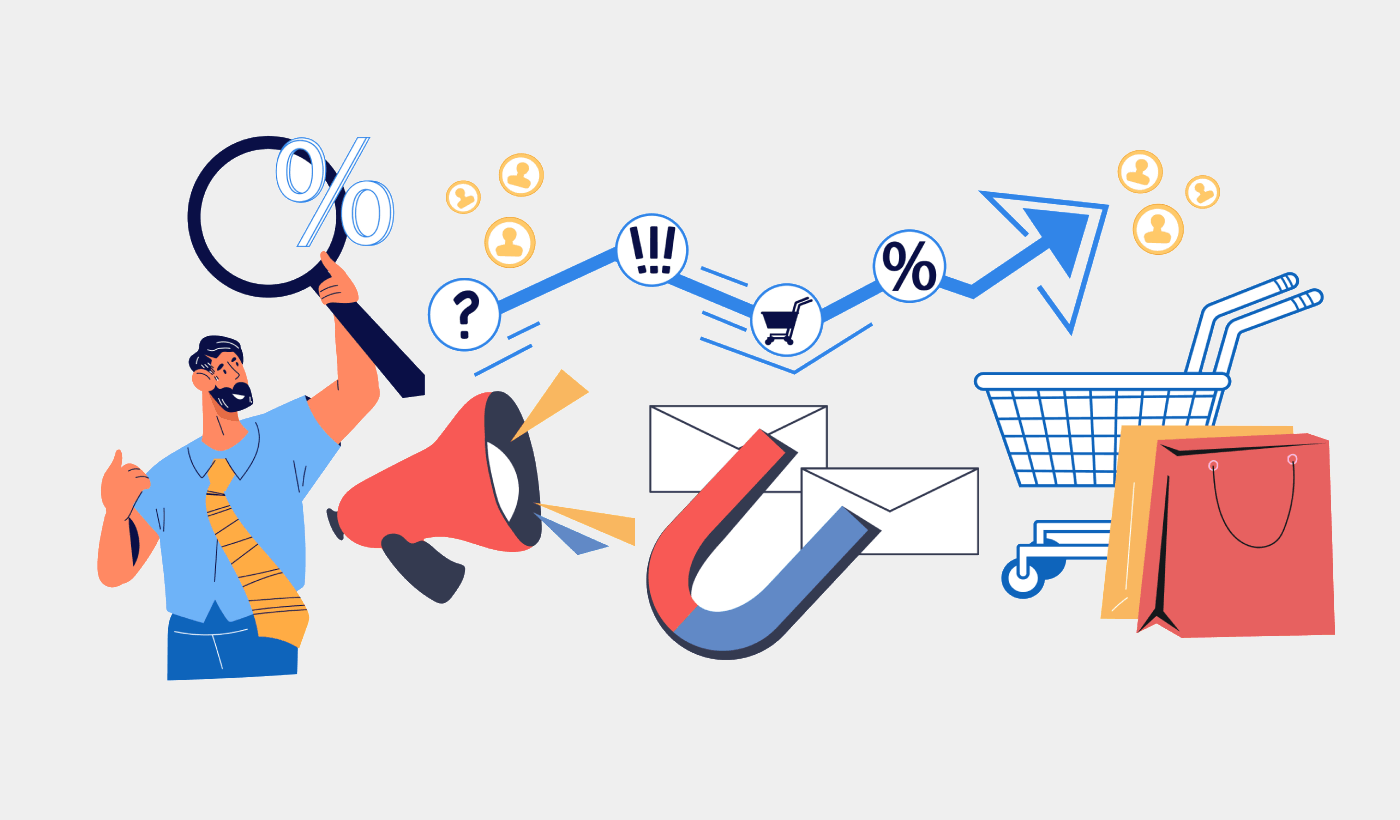
如何在没有数据团队的情况下构建电子商务细分
Most ecommerce teams assume serious segmentation requires a data analyst and a dedicated CDP. It does not.步骤 1:从您已有的信号开始
Your push platform already knows where each subscriber opted in, what device they are using, where they are in the world, and when they last clicked one of your notifications. These four dimensions alone let you build meaningful segments. A subscriber who opted in from a product detail page on mobile in the US is a materially different audience member than someone who opted in from your homepage on desktop in Germany.步骤 2:叠加行为信号
Once your ecommerce integration is connected — via a native plugin for Shopify, WooCommerce, or WordPress, or via the API for custom stacks — you can start adding behavioral signals: browse and view events, cart add and abandon signals, and purchase events (category, order value, frequency). These power the high-value segments: cart abandoners, browse abandoners, post-purchase sequences, and value-based cohorts. A detailed breakdown of how ecommerce websites should use segmentation in push notifications covers the mechanics of each connection.步骤 3:使用动态细分,而不是静态列表
Static lists — “all subscribers from last month” — do not update. A subscriber who purchases, unsubscribes, or changes behavior stays in the static list regardless. Dynamic segments update automatically as subscriber behavior changes. You define the rule; the platform keeps membership current. Zero ongoing maintenance, and cohorts always reflect current state.步骤 4:将条件组合成受众群体
The real targeting power comes from combining multiple segment dimensions with AND/OR/NOT logic. “Mobile subscribers in the US who viewed Product X in the last 7 days but have not purchased” is a multi-condition audience group — and it is the kind of cohort that converts at 3–4x the rate of a list-wide blast, because every member of that group has shown the same specific intent signal. PushEngage’s Dynamic Segmentation feature handles this exact use case — define the conditions, save the group, apply it to any campaign or workflow. Business plans include 25 saved audience groups; Premium and above offer unlimited groups.步骤 5:在扩展之前进行验证
Start with one or two segments, run them against your next campaign, and measure lift versus your baseline list-wide CTR. Once you see that product-page opt-ins convert at 2–3x the rate of homepage opt-ins, the case for expanding segmentation depth makes itself.
在自有留存渠道中激活细分
Segmentation is only as valuable as the channels you activate it on. The highest-ROI activation happens on channels you own — where you are not paying per message and where delivery reaches subscribers directly, without inbox competition or algorithm interference.网页推送:最快的激活渠道
Web push notifications land in seconds. You are not waiting for someone to open their email client. When a cart abandonment segment fires a push 30 minutes after a subscriber leaves without purchasing, you are catching them mid-decision — still in buying mode, still on a device. That timing advantage is what drives web push’s 400% higher open rates than email for equivalent campaigns. Segment activation for web push works at every stage of the funnel:- 新订阅者欢迎系列(生命周期细分)
- 产品页面选择加入的浏览放弃(行为细分)
- 特定地理区域高频购买者的闪购活动(RFM + 地理位置)
- 针对 30 天以上不活跃订阅者的再互动序列(生命周期 + 行为)
应用推送:针对移动订阅者的精准推送
Mobile app subscribers represent your highest-intent audience — they installed your app, a stronger commitment signal than a web push opt-in. App push segmentation follows the same framework (behavioral signals, geographic targeting, lifecycle stage), but the context shifts. Mobile subscribers read notifications in brief windows: keep copy shorter, CTAs direct, and deep-link to the exact product or screen the subscriber showed interest in. Technographic segmentation matters here too — iOS and Android subscribers have different notification behaviors and rich media capabilities, so targeting them separately produces measurably better results than treating all mobile users as one group.WhatsApp:针对国际和再互动的高参与度渠道
WhatsApp adds a conversational channel to your segmentation stack with high open rates for segments where it fits. For international audiences, especially in LATAM, Southeast Asia, and the Middle East, WhatsApp often outperforms web push for direct engagement. The best ecommerce uses: order update and shipping sequences (post-purchase lifecycle), win-back campaigns for lapsed segments, and VIP offers for your top RFM tier. WhatsApp is an expansion channel, not a replacement for web or app push. The strongest retention stacks run all three — each segment gets the channel where it is most likely to engage.
常见问题解答
电子商务中人口统计细分和行为细分有什么区别?
Demographic segmentation groups customers by who they are (age, gender, location, income). Behavioral segmentation groups them by what they do (pages visited, products viewed, purchases made, notifications clicked). For ecommerce campaigns, behavioral signals are almost always more predictive of purchase intent. Use demographic segmentation for broad audience framing and product-category matching; use behavioral segmentation for precision campaign targeting.电子商务商店一次应管理多少个细分受众群?
Start with three to five. New subscribers, cart abandoners, and at-risk/lapsed customers cover the most high-value use cases. Add geographic, RFM, and psychographic dimensions as your list and behavioral data grow. A useful rule: every segment should have at least 200 active subscribers to yield reliable performance signals.细分受众群对小型订阅者列表有效吗?
Yes — and it matters more at small scale than most teams expect. With 2,000 subscribers, a list-wide blast that generates unnecessary unsubscribes is proportionally more damaging than on a list of 100,000. Subscription page segmentation and device-type segmentation require no additional data collection and immediately improve precision regardless of list size.细分受众群如何与收入归因相关联?
Segmentation requires pairing with goal tracking — assign a conversion goal (purchase, session) to each segmented campaign, then attribute revenue to the segment that drove it. Over time, this creates a ranking of your highest-revenue segments, which informs both acquisition strategy (invest in opt-in placements that generate your best subscribers) and campaign prioritization (send most frequently to your highest-converting cohorts).