Je hebt een sterke tijdelijke bundel gebouwd. De art was goed, de prijs was juist, de korting was echt. Hij liep 48 uur en converteerde een fractie van wat je had gemodelleerd. De post-mortem geeft de aanbieding de schuld, dus de volgende sprint gaat over het herontwerpen van de winkel en het opnieuw prijzen van het pakket. Dat is meestal de verkeerde oplossing. De meeste studio's die proberen in-game aankopen te verhogen, tweaken de aanbieding terwijl het werkelijke lek de levering is: de juiste speler heeft het nooit gezien op het moment dat het ertoe deed, of zag het halverwege een level en veegde het weg. De aanbieding was prima. Hij bereikte gewoon niemand op tijd.
De data ondersteunt de aanbieding. Tijdelijke aanbiedingen kunnen de omzet met 20-30% verhogen tijdens het aanbiedingsvenster, tijdelijke bundels presteren ongeveer 8% beter dan losse items, en Clash Royale's Legendary Chest Bundle converteerde naar verluidt ongeveer 50% beter dan vergelijkbare losse aanbiedingen. Aanbiedingen werken. Het onopgeloste probleem is bereik en timing, en dat is een notificatieprobleem, geen prijsstellingprobleem.
Dit artikel gaat over het dichten van die kloof: de aanbiedingsnotificatie behandelen als de monetisatiehendel, de eCommerce trigger playbook lenen voor in-app aankopen, segmenteren op besteding en leveren per kanaal, omzet toeschrijven aan de notificatie, en dit alles doen zonder de reden te worden waarom een speler je dempt.
- Jouw aanbieding is niet het probleem; de timing wel
- In-game aankoopnotificaties: de trigger is de monetisatiehendel
- Leen de eCommerce playbook: triggers gebouwd voor in-app aankopen
- Segmenteer op besteding, lever per kanaal
- Koppel elke aanbiedingsnotificatie aan ARPPU, niet aan opens
- De lijn die je niet overschrijdt: frequentielimieten en op waarde gebaseerde aanbiedingen
- Wat het kost, en waarom eigen-kanaal aanbiedingen zich opstapelen
Jouw aanbieding is niet het probleem; de timing wel
Aanbiedingstijd bepaalt conversie meer dan aanbiedingsontwerp. Candy Crush wacht beroemd tot rond level 20 om de eerste aankoop prompt te tonen, omdat een speler die nog geen muur is tegengekomen, geen reden heeft om een manier te kopen om er voorbij te komen. Dezelfde aanbieding die op een frustratiemoment converteert, converteert bijna nul wanneer deze een speler onderbreekt midden in de flow. Een winkelherontwerp kan slechte timing niet oplossen. Een getriggerde notificatie kan dat wel, omdat deze afgaat op het gedrag van de speler in plaats van op je campagnuskalender.
Dus de vraag verschuift. Niet "wat moet de bundel zijn", maar "welk moment maakt deze bundel relevant, en hoe bereik ik de speler precies dan." Beantwoord dat en de aanbieding die je al hebt, begint te converteren zoals de benchmarks zeggen dat hij zou moeten.
Slechte timing is ook geen kleine belasting. Een aanbieding die halverwege een level wordt afgevuurd, is een onderbreking waar een speler een hekel aan heeft, en wrok is het tegenovergestelde van koopintentie. Een aanbieding die wordt afgevuurd nadat het venster is gesloten, stuurt een tik naar een winkelpagina die de deal niet meer heeft, wat de speler traint om je volgende bericht te negeren. Timingfouten falen niet alleen in conversie; ze putten de aandacht uit die je nodig zult hebben voor de aanbieding die wel had gewerkt.
In-game aankoopnotificaties: de trigger is de monetisatiehendel
Stop met denken aan de push als een uitzending over een uitverkoop. De versie die omzet genereert, is een op gedrag getriggerd aanbod dat wordt geactiveerd op het moment dat de relevantie piekt. In-game aankoopmeldingen verdienen hun conversie wanneer de trigger gekoppeld is aan wat de speler zojuist heeft gedaan, niet aan de klok.
Een paar triggers om eerst te bouwen:
- Net tegen een muur gelopen. Een speler faalt drie keer voor hetzelfde moeilijke level, ziet dan een aanbod voor de booster die het vrijmaakt. Dit is het Candy Crush-moment, geautomatiseerd.
- Weinig valuta of energie. De speler raakt halverwege een sessie zonder, en krijgt een one-tap top-up aanbod terwijl de intentie om door te spelen nog heet is.
- Een pakket bekeken, niet gekocht. De speler opende de winkel, keek naar een bundel en vertrok. Dat is de gamingversie van een verlaten winkelwagentje, en het verdient een follow-up.
- Status verdiend. De speler voltooide een high-level quest en krijgt een aanbod voor de uitrusting die bij hun nieuwe niveau past.
Elk van deze is een regel die je eenmalig instelt, geen campagne die je met de hand runt. De trigger is de hendel, omdat deze het aanbod voor de ene speler plaatst, op het ene moment, wanneer het converteert.
Leen de eCommerce playbook: triggers gebouwd voor in-app aankopen
Hier is de snelkoppeling die de meeste studio's missen: de trigger-campagnes die omzet herstellen in eCommerce, komen bijna één-op-één overeen met in-app aankopen. PushEngage levert deze al als sjablonen voor winkels; ze richten op een gamewinkel is dezelfde machine met andere labels.
| eCommerce-trigger | Gaming IAP-analogie | Voorbeeldmelding |
|---|---|---|
| Verlaten winkelwagentje | De in-game winkel geopend, niet gekocht | “Je starterspakket ligt nog in de winkel. Het verloopt vanavond.” |
| Prijsdaler alert | Een pakket dat een speler bekeek, daalt in prijs | “Het juwelenpakket waar je naar keek, is dit weekend 30% korting.” |
| Alert voor back-in-stock | Een beperkte bundel wordt live of keert terug | “De legendarische bundel is terug voor 24 uur.” |
| Browse-abandonment | Cosmetische set bekeken, niet gekocht | “Maak de look af. De volledige skin-set is nu live.” |
Je kunt de nudge voor de verlaten winkel modelleren naar een bewezen herstelstroom voor verlaten winkelwagentjes, pakketkortingen uitvoeren als prijsdaler alerts, en terugkerende bundels aankondigen met back-in-stock alerts. Niets hiervan vereist het uitvinden van een nieuw systeem.
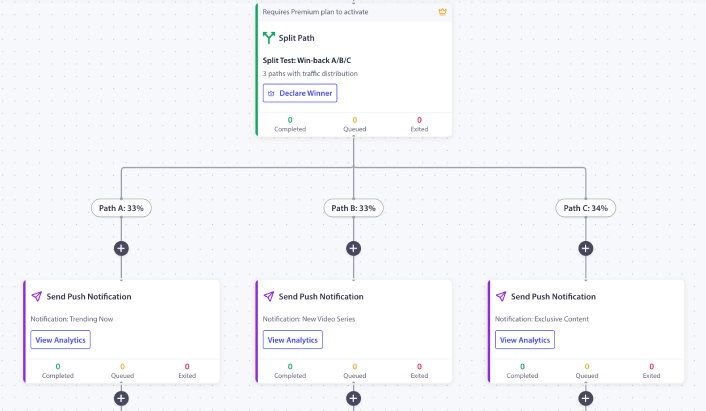
Wat dit praktisch maakt, is dat het gedragssignaal al in je game aanwezig is. Je bouwt geen nieuwe instrumentatie; je vuurt een melding af op een gebeurtenis die je al volgt. Een speler die de winkel opent en vertrekt, is een geregistreerde gebeurtenis. Een prijsverandering van een pakket is een geregistreerde gebeurtenis. Een bundel die terugkeert naar de winkel is een geregistreerde gebeurtenis. De trigger is simpelweg de regel die elk van die gebeurtenissen omzet in een tijdige, relevante aanbieding in plaats van een moment dat ongem Monetiseerd voorbijgaat.
Tijdelijke aanbiedingen die de speler op tijd bereiken
Tijdelijke aanbiedingen slagen of falen op bereik binnen het venster. Een bundel van 48 uur die een speler na 50 uur ontdekt, leverde niets op, hoe goed deze ook was. De geactiveerde melding is wat de kloof tussen 'aanbieding is live' en 'juiste speler weet het' overbrugt, en het is wat u in staat stelt om in de laatste uren een afsluitende herinnering te sturen naar spelers die hebben gekeken maar niet hebben gekocht. Bouw de hele reeks eenmaal in de aanbiedingsworkflow-builder, stel het venster in en laat het draaien.
Segmenteer op besteding, lever per kanaal
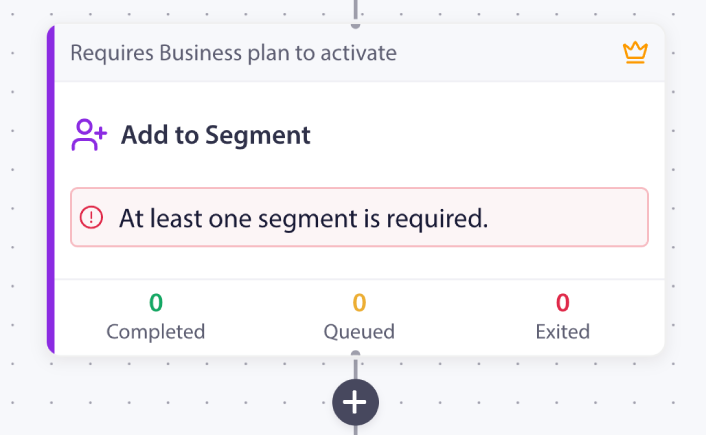
Eén aanbieding naar je hele basis sturen is hoe je inkomsten verdisconteert die je toch al had verdiend en spelers irriteert die het nooit zouden kopen. De bestedingslaag bepaalt de aanbieding; het kanaal bepaalt of deze aankomt.
| Bestedingslaag | De juiste aanbieding | Beste kanaal |
|---|---|---|
| Niet-spender | Een kleine, laagdrempelige eerste-aankoop-duw na een waardevol moment | App pushmelding |
| Midden-spender | Een bundel die past bij waar ze zich in de progressie bevinden | App-push of web-push (companion store) |
| Hoge waarde | Vroege toegang, een VIP-bundel, een echt exclusief item | WhatsApp of app-push, handmatig gemaakt |
De speler met een hoge waarde is een persoonlijk kanaal waard, daarom presteert het bereiken van hen op WhatsApp voor een een-op-een aanbieding beter dan een generieke uitzending, terwijl de brede basis draait op app-pushmeldingen. Het punt is om inspanning af te stemmen op waarde, niet om maximale uitgaven van iedereen te halen.
De laag die het meest wordt genegeerd is de niet-spender, en het is degene met de meeste upside. De meerderheid van een free-to-play-basis doet nooit een eerste aankoop, dus een enkele, goed getimede, laagdrempelige eerste-aankoop-duw, afgevuurd na een echt waardevol moment in plaats van op dag één, is vaak meer waard in totaal dan een andere bundel gericht op spelers die al uitgeven. Verplaats zelfs 2% van de niet-spenders naar een eerste aankoop en je hebt meer gedaan voor de totale inkomsten dan je bestaande betalers harder te knijpen, en je hebt het gedaan zonder de aanbiedingen aan te raken die je loyale spelers al accepteren.
Multi-channel game monetisatie zonder de spam
Multi-channel game-monetisatie werkt alleen als de kanalen één abonneesidentiteit en één frequentielimiet delen, zodat een speler die midden in een aankoop zit via app-push niet ook dezelfde aanbieding krijgt via web-push. Eén identiteit, één limiet, de aanbieding wordt gerouteerd naar het oppervlak waar de speler daadwerkelijk kijkt. Die orkestratie tussen kanalen is het verschil tussen een gecoördineerde aanbieding en een stapel meldingen die een speler leert negeren.
Koppel elke aanbiedingsnotificatie aan ARPPU, niet aan opens
Een aanbiedingsmelding die een klikpercentage van 23% oplevert, maar geen incrementele aankopen, is een kostenpost, geen overwinning. De in-game aankoopmeldingen die de moeite waard zijn om te bewaren, zijn degene die je kunt herleiden tot een daadwerkelijke aankoop. De metriek die ertoe doet voor monetisatie zijn niet de opens; het is de gemiddelde omzet per betalende gebruiker en het percentage waarmee je spelers converteert naar betalers. Om het kanaal te verdedigen, moet je inkomsten toeschrijven aan de specifieke melding die deze heeft geproduceerd.
Van notificatie tot omzet: bewijs dat je spelers converteert naar betalers
De te instrumenteren keten loopt: aanbiedingsmelding geleverd → winkelbezoek → aankoop → ARPPU-verhoging. Doeltracking op meldingsniveau sluit die cirkel, zodat u bijvoorbeeld kunt zeggen: “de aanbieding met lage valuta-top-up genereerde vorige maand $9.300 aan aankopen met een conversie van 6%”, niet “we hebben een verkoop-push verzonden”.
Zo bewijst u dat het kanaal spelers omzet in betalers en bepaalt u welke triggers u wilt opschalen. PushEngage-verkopers buiten gaming zien nu al dit soort toeschrijfbare verhogingen: SuperJeweler genereerde een omzetverhoging van 8,2% alleen al door pushmeldingen voor winkelwagenherstel, en de trigger voor verlaten winkels hierboven is dezelfde mechaniek. Zodra de omzet per melding is toegeschreven, krijgen de triggers die spelers omzetten in betalers meer budget en worden de triggers die alleen tikken verplaatsen geschrapt.
De lijn die u niet overschrijdt: frequentielimieten en waardebased aanbiedingen
Monetisatie-push heeft een faalmodus die de andere use cases niet hebben: push te hard en u verliest niet alleen een verkoop, u verliest de speler. Te veel berichten over aanbiedingen sturen is een van de snelste manieren om een uninstaller te krijgen, en een gedeïnstalleerde speler koopt niets. De vangnetten zijn niet optioneel.
Drie regels houden een aanbiedingsprogramma aan de juiste kant van de lijn. Beperk aanbiedingsmeldingen strikt, niet meer dan een paar per week, gescheiden van uw gameplay- en retentieberichten. Zorg dat elke aanbieding echte waarde biedt waar de speler u dankbaar voor zou zijn, geen gefabriceerde paniek. En beëindig de campagne op het moment dat de speler koopt, zodat een betalende klant nooit wordt lastiggevallen over hetgeen dat hij zojuist heeft gekocht. Dit is het verschil tussen de vriendelijke, waardebased aanpak van PushEngage en de dark-pattern monetisatie waar de branche terecht voor bekritiseerd wordt. Het beschermt ook de afleverbaarheid en het vertrouwen waarop elke toekomstige aanbieding afhankelijk is.
Er is een omzetargument voor de vangnetten, niet alleen een ethisch argument. Een speler die u behoudt, is een speler die volgende maand opnieuw kan kopen; een speler die u dempt of deïnstalleert vanwege aanbiedingsspam, is een klant die u eenmalig hebt geconverteerd en vervolgens hebt vernietigd. Frequentielimieten en waardebased aanbiedingen zijn hoe u de levenslange waarde beschermt die het hele programma de moeite waard maakt. De studio's die jarenlang het beste monetiseren, zijn niet degenen die in een bepaalde week het hardst pushen.
Wat het kost, en waarom eigen-kanaal aanbiedingen zich opstapelen
Het laatste argument is kosten. Het kopen van een aanbiedingsplaatsing, een advertentie, een interstitial, een cross-promo, kost geld elke keer dat het wordt uitgevoerd. Het leveren van dezelfde aanbieding via een kanaal dat u bezit, kost bijna niets per verzending, en PushEngage brengt alleen kosten in rekening voor actieve abonnees, dus uw factuur volgt het publiek dat daadwerkelijk kan kopen, niet de ijdelheidslijstgrootte. Het is het 'betaal-alleen-voor-actieve-abonnees'-model, dus de aanbiedingsengine blijft goedkoop naarmate deze schaalt.
En het groeit. Elke nieuwe abonnee is een andere speler die u kunt bereiken met een getriggerde, goed getimede aanbieding zolang ze spelen, zonder extra kosten. Betaalde promo wordt elke campagne gereset; monetisatie van game via eigen kanalen blijft de basis converteren die u al hebt opgebouwd.
De conclusie is één zin: om in-game aankopen te verhogen, stop met het opnieuw ontwerpen van de winkel en begin met het oplossen van de levering. Activeer het aanbod op basis van het gedrag van de speler, leen het eCommerce-handboek, segmenteer op uitgaven, lever per kanaal, schrijf de inkomsten toe en beperk de frequentie. Het aanbod was waarschijnlijk nooit het probleem. Het bereiken van de juiste speler op het juiste moment was dat wel, en dat is het enige dat een eigen notificatiekanaal beter doet dan al het andere.
Voer het uit vanaf uw AI-assistent: alles in dit handboek — het bouwen van het segment, het plannen van de campagne, het ophalen van de resultaten — werkt via de PushEngage MCP-server. Verbind Claude (of een andere MCP-compatibele assistent) eenmalig met uw PushEngage-account, beschrijf vervolgens de campagne en laat deze de klikken uitvoeren. Zie pushmeldingen verzenden vanaf uw AI-assistent voor een uitgewerkt voorbeeld.
Klaar om van uw volgende tijdelijke aanbieding omzet te maken waar u de inkomsten van kunt toeschrijven? Begin met het betaal alleen voor actieve abonnees plan en bouw deze week uw eerste getriggerde aanbieding.


