There is great benefit in understanding consumer behavior. Knowing your target audience makes life easier, makes efforts more effective, and risks reduced in every aspect of a business. If you predict how customers will act at least to some extent, you can plan better, make better projections, make your operations customer-centric.
Given that 70% of respondents in a global survey said price is the most important factor they consider when choosing a retailer, acknowledging that price is a top priority is an important step in understanding the modern consumer.
The next step is understanding how your prices are perceived by the consumer. Do you think your pricing is fair in customers’ eyes? Is there a way to predict/alter consumers’ perception of a price?
To have a better grasp on the issue, we’ll examine 9 psychological pricing techniques, debunk the common misconceptions regarding the effectiveness of these tactics and learn how to apply them.
Learning psychological pricing techniques is like shooting fish in a barrel
Below are 9 psychological pricing techniques
Adjusting an online price is much more convenient than changing a price tag. Especially if you’ve adopted some level of pricing automation, experimenting with pricing tactics is so easy yet incredibly effective. That, on its own, gives you two reasons to learn and apply psychological pricing tactics.
First of all, your competitors try these tactics, and some turn them into advantages. If you don’t even test these strategies, it’s a missed opportunity.
Second, having a better understanding of shoppers’ tendencies and biases will help you pinpoint the right tactics that’ll increase your sales, build a long-term relationship with your customers, and brand loyalty.
Being a consumer yourself, you’re already exposed to some of these techniques and even implemented some before. The tactics that lured you into a retailer 10 years ago won’t create the same effect now. So keep in mind that consumer behavior is changing and you need to keep up with it.
In short, learning and applying these tactics are really easy and some of them will prove effective. Try them out and see for yourself!
Charm Pricing
Charm pricing is a tactic based on the idea that shoppers are inclined to perceive odd prices, ending with $-,99, e.g. $1,99, cheaper than round prices, e.g. $2. A rational buyer would tell you that a 1 cent difference in price won’t affect their judgment of a price, but research proves otherwise.
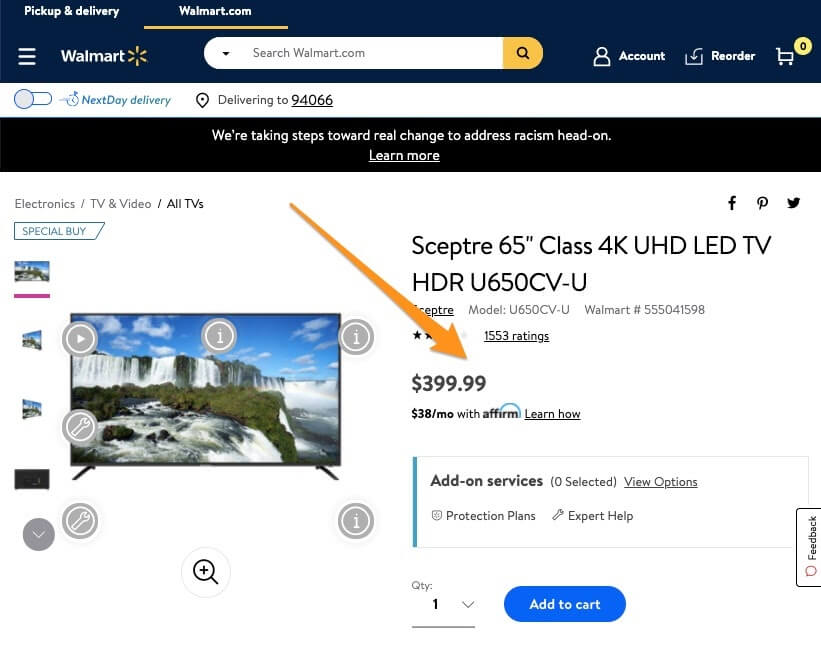
Also known as odd pricing, it’s perhaps the most popular pricing technique you’ve seen a million times before. It requires minor effort, so try it and see its effect on sales if you haven’t already.
Decoy Pricing
It’s another technique where marketers attempt to take advantage of the cognitive biases of the human brain.
A commonly held belief among marketers is that when a shopper is choosing between two options, a third asymmetrically dominated option can be used to push them towards choosing a certain option.
In theory, the decoy option here drives customers to buy the more expensive one of the two original options. Research suggests that although there is an attraction effect driven by the decoy option, it’s less robust than widely believed.
Price anchoring
Anchoring is another cognitive bias that inspired marketers. The idea behind anchoring is that the human brain makes judgments based on the first information they encounter.
Making use of this tendency, sellers display a higher initial price simultaneously with the original price, anticipating that this initial piece of information will impact how shoppers perceive the actual price.
The use of price anchoring is so common that most of you already apply it without really knowing why.
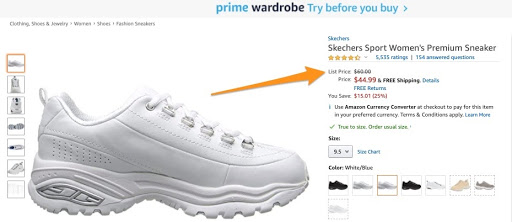
Some stores show customers artificially high anchor prices to make the current offer seem much more attractive than it really is. The problem is, most online shoppers search for a good price before making a purchase, so they can easily notice that the anchor price is artificially high. It will lead to mistrust among consumers and negatively affect your relationship.
Tactics to display price information
Have you ever considered the impact of the display of your prices? Marketers have been experimenting with tactics regarding the display of price information, and some have proven successful.
Showing price in small fonts
Research suggests that displaying prices in small fonts can make your price seem smaller.
Showing price without the coma
Research on consumer behavior suggests that removing the coma from the price can make it seem smaller.
Showing price in a distinctive form
Displaying price in a distinctive form—in a form that’ll allow shoppers to easily distinguish it from other information—is another way to drive sales.
Sorting prices in descending order
Research on the influence of price presentation order on buying behavior suggests that presenting prices in descending order—showing the more expensive products first—can increase consumers’ willingness to pay.
But note that some people might want to see the cheapest, most popular, or the most relevant results first, depending on their browsing purpose. Offer them several sorting options and let them decide.
Discount tactics
The type of your discounts and when and how frequently you apply them have an impact on how consumers perceive the fairness of your prices. Don’t forget to update users when there is a drop in the price of the products.
Offering multiple discounts
Instead of offering high percentage discounts, divide the discounts into several campaigns. It’s a good way to capture the attention of bargain hunters.
Emphasizing the seasonality of discounts
促销和折扣可以促进销售,但如果频繁使用,它们会削弱您的产品/服务的价值。
价格在我们的心中扮演着两个相互关联的角色。积极的一面与产品/服务的质量相关联,而消极的一面则代表了我们为换取产品/服务而做出的牺牲。
当您打折过多时——尤其是在人们在您的网站上看到折扣的频率高于原价时——他们会下意识地忽视您产品的价值,甚至在没有折扣时也不愿支付全价。
结语
了解消费者行为对于电子商务所有者至关重要。了解他们在新信息面前的行为方式是做出更好定价决策的关键。由于大多数消费者对价格敏感,请发送价格变动提醒。
幸运的是,消费者行为学文献每天都为我们提供新的见解,揭穿营销人员普遍存在的误解,并为我们提供值得我们投入时间和精力的技巧。
尝试这些策略,看看它们是否适合您的商店,并告诉我们您的发现!


